


No, you should generally not use a body scrub on your face unless the product is specifically formulated and labelled for facial use. Body scrubs may contain abrasive particles that can irritate delicate facial skin, aggravate breakouts and weaken the skin barrier.
For safer exfoliation, choose a face-specific product suited to your skin type, or focus on gentle cleansing and moisturising if your skin is sensitive or irritated.
Many people ask, can we use body scrub on face, especially when trying to simplify their skincare routine. However, facial skin requires a more careful approach to exfoliation. The size and shape of exfoliating particles, the formulation and the amount of friction during application all influence how a product affects your skin. For a closer look at the product itself, you can read this guide on how to use body scrub.
A scrub that works well on your elbows, knees or legs may not be suitable for your face. Understanding these differences can help you choose products that support smoother-looking skin without unnecessary irritation. If you are comparing options for the body, this guide on which body scrub is best may help.
What Happens If You Use Body Scrub on Your Face?
Applying a body scrub to your face can irritate, particularly if the formula contains coarse particles or you rub the skin too vigorously. The effects depend on the product, your skin type, and how frequently you exfoliate.
Microabrasions and Surface Damage
Body scrubs containing rough or irregular exfoliating particles can create excessive friction on delicate facial skin. Vigorous scrubbing may cause tiny surface injuries, discomfort and increased sensitivity.
Breakouts and Inflammation
Aggressive exfoliation can aggravate existing acne, inflamed pimples and sensitive skin. Scrubbing harder does not necessarily remove more impurities and may worsen redness and irritation.
Damage to the Skin Barrier
Your skin barrier helps retain moisture and protects against external irritants. Excessive exfoliation can disrupt this protective layer, resulting in dryness, tightness, flaking and increased sensitivity.
Redness and Discomfort
Facial skin may become red, itchy, tender or uncomfortable after using an unsuitable scrub. These symptoms can be more pronounced if you already use exfoliating acids, retinoids or other potentially irritating skincare products.
Why Body Scrubs Can Be Too Harsh for Facial Skin
The face and body have different skincare needs. Although skin thickness varies across body areas and between individuals, the face often requires a more cautious approach to physical exfoliation. For the rest of the body, you can browse body care products made for that purpose.
-
Skin sensitivity: Facial skin, particularly around the eyes, may be more vulnerable to friction and irritation.
-
Exfoliation intensity: Body scrubs may contain particles designed to polish rougher areas such as elbows, knees and heels.
-
Skin barrier: Excessive rubbing can compromise moisture retention and increase sensitivity.
-
Existing skin concerns: Acne, eczema, rosacea and an already irritated skin barrier may make physical exfoliation unsuitable.
The important distinction is not simply that facial skin is always thinner than body skin. It is whether the product's formulation, exfoliating particles and intended use are appropriate for the area being treated.
Body Scrub vs Face Scrub: Key Differences
Body scrubs and face scrubs differ in their intended use, exfoliating texture and overall formulation. However, these differences are not universal: some body products are mild, and some facial scrubs can still be too abrasive.
|
Factor |
Face Scrub |
Body Scrub |
|
Intended use |
Formulated specifically for facial skin |
Formulated for areas of the body |
|
Particle size |
May use finer or more controlled exfoliating particles |
May contain more substantial polishing particles |
|
Particle texture |
Should be suitable for gentle facial exfoliation |
May create more friction, depending on the ingredients |
|
pH |
Depends on the complete formulation |
Depends on the complete formulation |
|
Ingredients |
Selected for the product's facial skincare purpose |
May include coffee, walnut shell powder, sugar, salt or other exfoliants |
|
Skin compatibility |
Should match facial skin type and sensitivity |
Should match the intended body area and skin tolerance |
|
Frequency |
Follow product instructions and skin tolerance |
Follow product instructions and avoid irritated skin |
Does pH Matter When Choosing a Scrub?
Yes, pH can influence how a skincare formulation interacts with the skin, but a body scrub is not automatically unsuitable because it has a higher pH than a face scrub. There is no single pH value that applies to every product in either category.
The formulation, exfoliating particles, cleansing ingredients, and intended use all matter. Do not assume a scrub is suitable for facial skin based on its pH alone.
Why Particle Size and Texture Matter
The size, shape, hardness, and uniformity of physical exfoliating particles can affect the amount of friction produced during application. Coarse or irregular particles, especially when combined with vigorous rubbing, may irritate facial skin.
Even a product marketed as a face scrub can cause irritation if used too frequently or applied with excessive pressure.
Are the Ingredients Different?
Body scrubs may contain exfoliating ingredients such as walnut shell powder, coffee particles, sugar or salt, alongside moisturising oils and botanical extracts. Facial exfoliants may use gentler physical exfoliants or chemical exfoliating ingredients such as alpha hydroxy acids (AHAs) and beta hydroxy acids (BHAs).
Natural ingredients are not automatically gentle. The complete formulation and the product's intended area of use are more important than whether its ingredients are natural or synthetic.
For example, Wildflower Naturals’ Coffee Walnut Body Scrub contains walnut shell powder, oat kernel flour, coffee extract, aloe vera, rose water and plant oils. The product is marketed as a body scrub, so it should not be substituted for a facial exfoliant. You can also explore body care products for women if you are building a body routine.
Can You Use Coffee Scrub or Sugar Scrub on Your Face?
Coffee and sugar scrubs are not automatically suitable for facial use. Their suitability depends on the particle texture and complete formulation, and products intended for the body should not be used on the face unless the manufacturer explicitly confirms they are appropriate for facial skin.
Can I Use Coffee Scrub on My Face?
It is best to avoid using a coffee body scrub on your face. Coffee-based scrubs may contain coarse particles or other exfoliating ingredients that create excessive friction and irritate delicate facial skin.
Coffee extract in a skincare formula is not the same as using a scrub containing abrasive coffee grounds. An ingredient's presence does not determine whether the complete product is suitable for the face.
If you want to use a coffee-based skincare product, choose one explicitly formulated for facial application and follow its instructions.
Can I Use Sugar Scrub on My Face?
A sugar scrub designed for the body is generally not recommended for facial exfoliation. Sugar crystals can create friction during rubbing, potentially causing redness, discomfort and irritation, especially if your skin is sensitive or acne-prone.
Sugar being water-soluble does not automatically make a sugar scrub gentle enough for facial skin. The particle texture, formulation and application method all influence the risk of irritation.
For your face, choose a product specifically formulated for facial use rather than experimenting with a homemade or body-focused sugar scrub.
What Should You Use Instead of a Body Scrub on Your Face?
The safest alternative depends on whether you want to remove surface buildup, improve the appearance of uneven texture or simply maintain healthy-looking skin. You do not need to exfoliate to have an effective skincare routine.
1. A Gentle Facial Cleanser
A mild cleanser can remove everyday dirt, excess oil, sweat and sunscreen without the need for abrasive scrubbing. Choose one suited to your skin type, and avoid repeatedly washing your face in an attempt to remove texture or blemishes.
2. A Suitable Facial Exfoliant
If exfoliation is appropriate for your skin, consider a face-specific product with clearly stated instructions.
-
Sensitive skin: Start with gentle cleansing and moisturising. Avoid exfoliating while your skin is irritated.
-
Oily or acne-prone skin: A facial product containing an appropriate exfoliating ingredient may help with certain concerns, but aggressive physical scrubbing can worsen irritation.
-
Dry skin: Prioritise moisturising and avoid exfoliation when your skin is flaky, tight or uncomfortable.
-
Normal skin: Choose an exfoliant formulated for the face and introduce it cautiously.
Chemical exfoliants, including AHAs and BHAs, can also irritate the skin. They are not automatically safer for everyone simply because they do not contain physical particles.
3. A Moisturiser That Supports Your Skin Barrier
If your skin feels dry or tight, a suitable moisturiser may be more beneficial than exfoliation. Look for a formula that helps maintain hydration and feels comfortable on your skin.
4. Facial Skincare from Wildflower Naturals
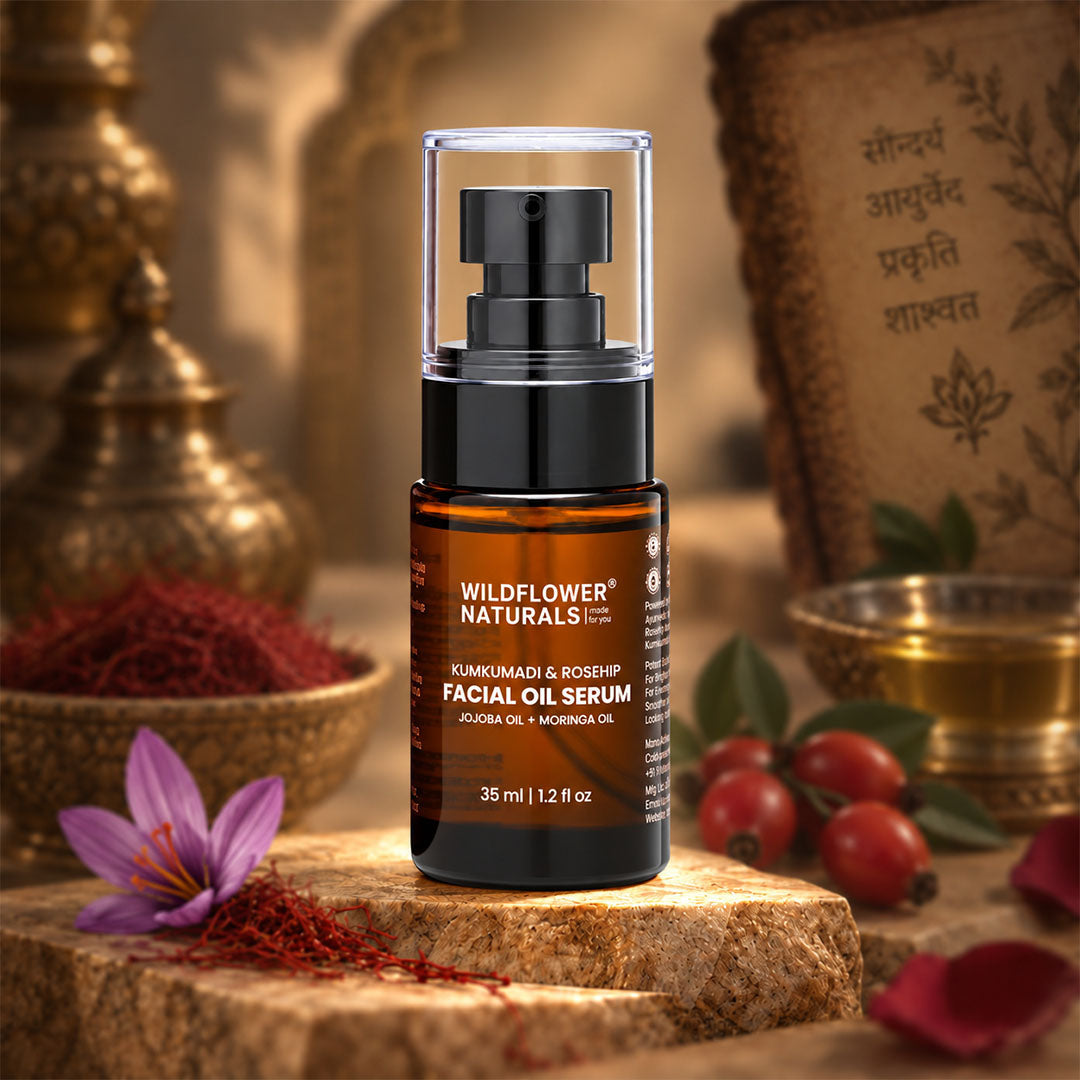
If you are looking for products intended for facial care, explore the Wildflower Naturals Face Care Collection. It includes options such as the Skin Renewal Cream with Vitamin C, facial mists, face creams, serums and masks.
Choose individual products according to their intended use, ingredients and compatibility with your skin. A face-care product is not necessarily an exfoliant, so check its description before adding it to your routine.
For body exfoliation, Wildflower Naturals' Coffee Walnut Body Scrub is marketed for normal-to-oily body skin. Keep it within its intended use rather than treating it as a facial scrub.
Skin Damage Signs to Watch For After Using a Body Scrub
If you have already used a body scrub on your face, do not panic. A single application does not automatically mean permanent damage, but it is important to recognise signs of irritation and give your skin time to recover.
Watch for the following symptoms:
-
Persistent redness: Your skin remains red or looks more inflamed than usual.
-
Burning or stinging: Water or previously comfortable skincare products cause an unusual stinging sensation.
-
Tightness and dryness: Your skin feels uncomfortable, rough or unusually dry.
-
Peeling or flaking: The skin starts shedding visibly after exfoliation.
-
Increased sensitivity: Your usual moisturiser or cleanser suddenly feels irritating.
-
Swelling, blistering or significant pain: These symptoms may indicate a more serious reaction and require prompt medical attention.
What to Do If You Have Already Used a Body Scrub on Your Face
-
Rinse gently: Wash away any remaining scrub with lukewarm water. Do not rub or use a cleansing brush.
-
Pause exfoliation: Stop using scrubs, exfoliating acids and other potentially irritating products until your skin has recovered.
-
Apply a gentle moisturiser: Use a familiar, fragrance-free moisturiser that does not sting.
-
Avoid additional irritation: Do not pick peeling skin, use hot water or try to neutralise the scrub with another ingredient.
-
Protect your skin: Use a broad-spectrum sunscreen during the day if tolerated, and minimise unnecessary sun exposure.
Seek medical advice if symptoms are severe, worsening or persistent. Blistering, significant swelling or intense pain warrants prompt assessment. Swelling of the lips or tongue or difficulty breathing requires emergency medical attention.
What Do Dermatologists Recommend About Facial Exfoliation?
Dermatology guidance generally emphasises choosing an exfoliation method according to your skin type, sensitivity and existing skincare routine. Gentle application is important, and exfoliation should be avoided on sunburned, wounded or actively irritated skin.
If you use retinoids, retinol, benzoyl peroxide or exfoliating acids, adding a physical scrub may increase irritation. Consider how these products work together rather than treating exfoliation as a necessary daily step.
There is no universal exfoliation schedule that suits everyone. Follow the instructions for your chosen facial exfoliant and reduce or stop use if you develop dryness, redness, peeling or discomfort.
If you are unsure which exfoliation method is suitable for your skin, consult a qualified dermatologist, especially if you have persistent acne, eczema, rosacea or recurring skin reactions.
How to Exfoliate Your Face Safely
If you choose to exfoliate, a gentle routine can help reduce the risk of unnecessary irritation.
-
Cleanse: Start with a mild facial cleanser and lukewarm water.
-
Choose the right product: Use an exfoliant specifically intended for facial skin.
-
Apply carefully: Follow the product directions and avoid vigorous rubbing or prolonged application.
-
Moisturise: Apply a moisturiser suitable for your skin type.
-
Use sun protection: Apply broad-spectrum sunscreen during the day, particularly when using exfoliating ingredients that may increase sun sensitivity.
Do not increase the frequency of exfoliation just because you want faster results. Your skin's response matters more than following a fixed weekly schedule.
Common Myths About Using Body Scrub on the Face
Myth 1: Natural Scrubs Are Always Safe
Natural ingredients can still be abrasive or irritating. Safety depends on the formulation, the intended area of use and individual skin tolerance.
Myth 2: If a Scrub Works on the Body, It Will Work on the Face
Body and facial products may be formulated for different purposes. A product that leaves your legs feeling smooth may cause unnecessary irritation when used on your face.
Myth 3: More Scrubbing Gives Better Results
Over-exfoliation can damage the skin barrier and make the skin look more irritated rather than smoother. Gentle skincare and consistent moisturising are often more useful than aggressive scrubbing.
Expert Tips for Maintaining Healthy-Looking Skin
-
Choose products intended for your skin type and the area being treated.
-
Avoid exfoliation when your skin is irritated or damaged.
-
Introduce new products gradually and follow their instructions.
-
Maintain a simple routine with gentle cleansing and moisturising.
-
Use sunscreen during the day.
-
Stop using any product that causes persistent discomfort or an unusual reaction.
Final Verdict: Can We Use Body Scrub on Face?
The answer is generally no. You should not use a body scrub on your face unless the manufacturer specifically confirms that the product is suitable for facial use. Coarse particles and vigorous rubbing can irritate facial skin, aggravate breakouts and compromise the skin barrier.
Choose a facial exfoliant formulated for your skin type if exfoliation is necessary, or stick to gentle cleansing and moisturising if your skin is sensitive. Using the right product matters more than scrubbing harder.
Discover Facial and Body Care with Wildflower Naturals
Wildflower Naturals offers separate collections for facial skincare and body care, making it easier to explore products according to their intended use.
Choose products according to their intended application and your skin's needs. Healthy-looking skin starts with gentle, consistent care rather than unnecessary exfoliation.
Frequently Asked Questions
1. Can I use coffee scrub on my face?
It is best to avoid coffee body scrubs on the face because their particles and formulation may cause irritation. Choose a coffee-based product only if it is specifically formulated for facial use.
2. Can I use sugar scrub on my face?
A body sugar scrub is generally not recommended for facial use. Sugar crystals can create friction and irritate delicate facial skin, particularly when rubbed vigorously.
3. Can I use body scrub on my face once?
A single use does not automatically cause lasting damage, but irritation is possible. Rinse gently, moisturise and avoid further exfoliation if your skin feels uncomfortable.
4. What should I do if I accidentally use body scrub on my face?
Rinse your face with lukewarm water, apply a gentle moisturiser and pause exfoliating products until your skin has recovered. Seek medical advice for severe or persistent symptoms.
5. What are the signs of over-exfoliation?
Common signs include persistent redness, burning, tightness, dryness, peeling and increased sensitivity. Stop exfoliating if these symptoms develop.
6. Can body scrub damage the skin barrier?
Yes, aggressive or repeated scrubbing can disrupt the skin barrier, causing dryness, irritation and sensitivity. The risk depends on the product and how it is used.
7. Is a natural body scrub safe for sensitive skin?
Not necessarily. Natural exfoliating particles and botanical ingredients can still irritate sensitive skin. Choose products formulated for the intended area and avoid exfoliating during flare-ups.
8. Should I exfoliate my face if it is already irritated?
No. Avoid exfoliation while your skin is irritated, sunburned or damaged. Focus on gentle cleansing and moisturising, and seek professional advice if symptoms persist or worsen.





Leave a comment
This site is protected by hCaptcha and the hCaptcha Privacy Policy and Terms of Service apply.