


Dry skin and dehydrated skin are not the same. Dry skin is generally a skin type that lacks enough natural oils, while dehydrated skin is a temporary condition caused by insufficient water. Dry skin often feels rough and flaky, whereas dehydrated skin may look dull, tight, and less plump.
Dry skin vs dehydrated skin can be confusing because both may leave your face feeling tight, rough or uncomfortable. The key difference is simple: dry skin is usually linked to a lack of oils, while dehydrated skin lacks water. Once you know which your skin needs, choosing the right routine becomes much easier. Let’s look closer.
Dry Skin vs Dehydrated Skin: What's the Difference?
The easiest way to understand dry skin vs dehydrated skin is to remember what each one lacks.
Dry skin generally lacks oil or lipids. It is often considered a skin type and may naturally feel rough, tight or flaky.
Dehydrated skin lacks water. Unlike dryness, dehydration is a skin condition that can affect any skin type, including oily and combination skin.
That means your skin can look shiny and still be dehydrated. It can also be both dry and dehydrated at the same time.
|
Factor |
Dry Skin |
Dehydrated Skin |
|
What it lacks |
Natural oils/lipids |
Water |
|
Usually considered |
Skin type |
Temporary skin condition |
|
Common signs |
Roughness, flakes, tightness |
Dullness, tightness, fine lines |
|
Can oily skin experience it? |
Less typical |
Yes |
|
Main skincare focus |
Nourishment and moisture retention |
Hydration and moisture retention |
Understanding this difference helps you avoid treating every tight or uncomfortable feeling with the same product.
What Is Dry Skin?
Dry skin happens when the skin does not produce or retain enough natural oils to keep its surface comfortable and supple. Genetics, age, weather, cleansing habits and environmental conditions can all influence how dry your skin feels.
Dryness is not always dramatic. Sometimes it simply shows up as skin that feels tight after cleansing or needs moisturiser almost immediately.
Common Signs of Dry Skin
Look out for:
- Rough or uneven texture
- Visible flaking
- Tightness
- Scaling or dry patches
- Increased sensitivity
- Redness or irritation
- Makeup settling around flaky areas
- A generally less supple feel
If your skin consistently feels rough rather than simply thirsty, you may be dealing with dryness.
What Causes Dry Skin?
Cold weather and low humidity can make dryness more noticeable. Long, hot showers, frequent washing and harsh cleansing products may also strip away oils that help keep the skin comfortable. Hands are often the first to feel this, so it helps to know which hand cream is best for dry cracked hands.
As skin matures, natural oil production can also change. For some people, this makes nourishing and barrier-supportive skincare increasingly important. The same applies beyond the face, which is why it helps to know which body cream is best for extremely dry skin.
What Is Dehydrated Skin?
Dehydrated skin is different because the issue is primarily a lack of water. It can happen temporarily when environmental conditions, skincare habits or lifestyle factors affect the skin's hydration levels.
One of the most confusing parts of dry skin vs dehydrated skin is that dehydration does not necessarily make the skin look dry. An oily complexion can still feel tight or appear dull because oil and water are not the same thing.
Signs Your Skin May Be Dehydrated
Dehydrated skin may:
- Look dull or tired
- Feel tight after cleansing
- Have more noticeable fine lines
- Look less plump
- Feel rough despite producing oil
- Develop patchy-looking makeup
- Seem less fresh than usual
Try paying attention to how your skin behaves throughout the day rather than judging it from one moment in front of the mirror.
What Causes Dehydrated Skin?
Weather changes, low humidity, air conditioning, hot water and over-cleansing can contribute to a dehydrated-feeling complexion. A routine that relies heavily on exfoliation or strong actives may also leave skin feeling uncomfortable.
The goal is not to add as many hydrating products as possible. It is to create a routine that adds hydration while helping the skin retain it.
How to Tell If Your Skin Is Dry or Dehydrated
When comparing dry skin vs dehydrated skin, look at both your skin's appearance and how it feels.
Persistent flaking and roughness are more commonly associated with dryness. Dullness, tightness and a lack of plumpness may point toward dehydration.
Your skin type can also offer a useful clue. If your T-zone becomes oily but your face still feels tight, dehydration may be part of the picture. If your entire complexion regularly feels rough, flaky and uncomfortable, dryness may be the bigger concern.
It is also possible to experience both. For example, naturally dry skin may become dehydrated during winter or after an overly aggressive skincare routine.
Can You Have Dry and Dehydrated Skin at the Same Time?
Yes. This is where dry skin vs dehydrated skin becomes especially important.
Someone with naturally dry skin can also lose water from the skin's surface. The result may be a combination of flaking, roughness, tightness and dullness.
When this happens, focusing on only one concern may not be enough. A balanced routine should provide hydration while also supporting the skin's natural moisture barrier.
Which Ingredients Help Dry and Dehydrated Skin?
Choosing ingredients according to your skin's needs is more useful than simply choosing products labelled "for dry skin." Many people also prefer exploring organic face care products that rely on gentler, plant-based formulations.
Ingredients for Dehydrated Skin
Humectants such as hyaluronic acid and glycerin are commonly used in hydration-focused skincare because they help attract and hold water. Aloe vera is another popular ingredient in lightweight hydrating formulations.
Wildflower Naturals' Kumkumadi & Donkey Milk Illuminating Face Gel with hyaluronic acid + Aloe vera can fit naturally into a hydration-focused routine. The brand lists both ingredients in its formulation.
Ingredients for Dry Skin
Dry skin often benefits from richer, nourishing textures and ingredients that help soften the skin and reduce moisture loss. Botanical oils can be useful as part of this type of routine.
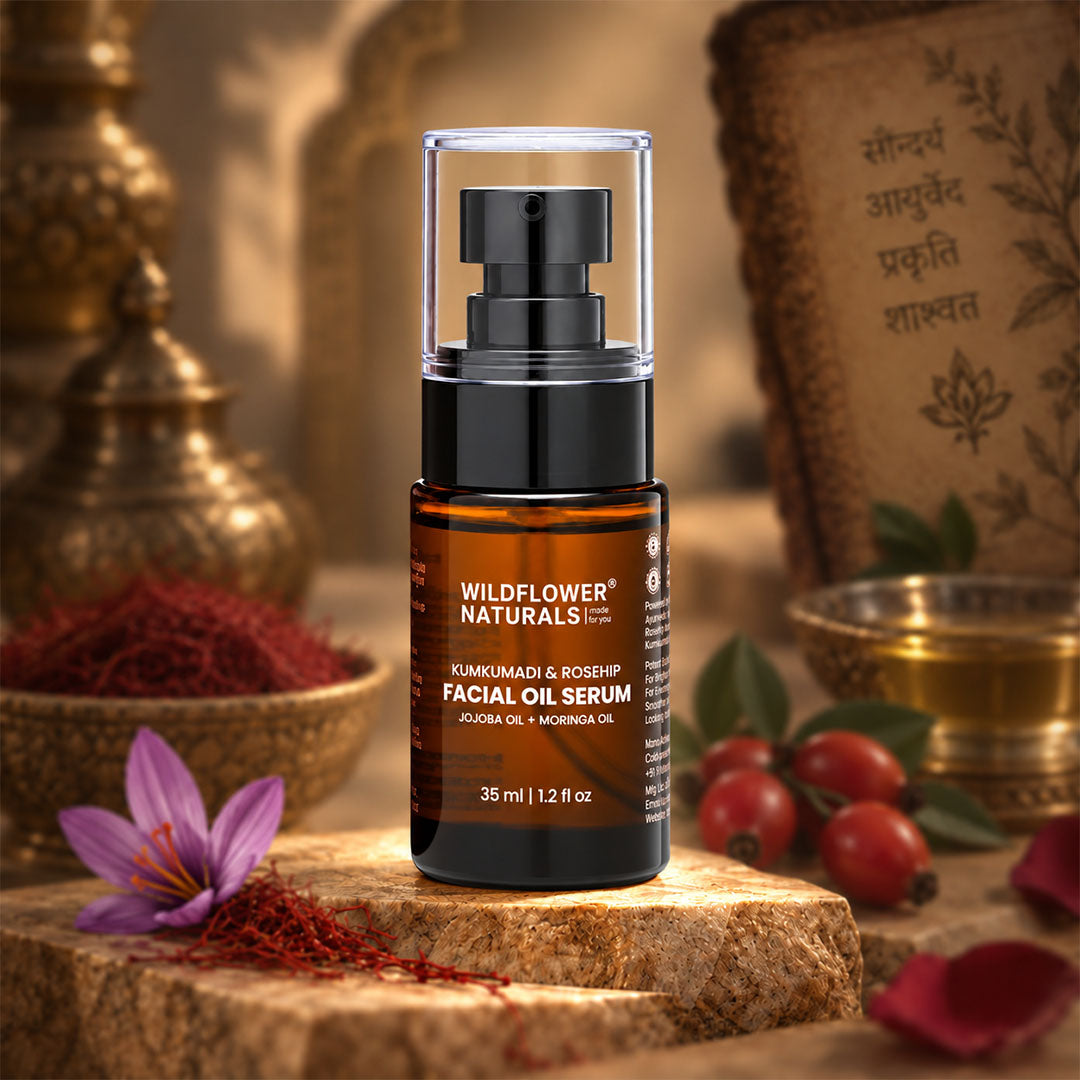
The Kumkumadi & Rosehip Facial Oil Serum with Jojoba oil + Moringa oil is one option from Wildflower Naturals' face serum collection, which the brand positions around nourishment and hydration for dry skin.
Ingredients That Support Both
Some routines can combine hydrating and nourishing ingredients. For example, a hydrating layer followed by a moisturiser can help address both water content and moisture retention.
The Kumkumadi & Donkey Milk Brightening Face Cream with Hyaluronic acid + Rosehip oil combines hydration-focused and nourishing ingredients and is listed by Wildflower Naturals among its face care products.
How to Care for Dry Skin
A simple routine is often better than a complicated one.
1. Start With Gentle Cleansing
Use a cleanser that leaves your skin comfortable rather than extremely tight or squeaky-clean. Avoid using very hot water, which can make already-dry skin feel more uncomfortable. Men dealing with dryness can also explore dedicated men's face care products suited to their skin's needs.
2. Add a Hydrating Step
A face mist or hydrating serum can add a lightweight layer before moisturising. Lavender Face Mist Normal to Dry Skin is included in Wildflower Naturals' face-care collection for normal-to-dry skin. If you're unsure where to start, this guide on which face mist is best for dry skin can help you choose the right one.
3. Use a Nourishing Moisturiser
Moisturiser helps support comfortable, supple-looking skin. Skin Renewal Cream with Vitamin C is described by Wildflower Naturals as a daily moisturiser designed to hydrate and nourish the skin.
4. Protect Your Skin During the Day
Sunscreen should remain a daily skincare essential, regardless of whether your main concern is dryness or dehydration. Wildflower Naturals' Kumkumadi & Donkey Milk SPF 50 Dew Drops Invisible Sunscreen is listed with UVA and UVB protection. For a complete routine, a men's face care kit can bring these essentials together.
How to Care for Dehydrated Skin
When dehydration is the concern, think in terms of hydrate, moisturise and protect.
Begin with gentle cleansing, then apply a hydration-focused serum or gel. Follow it with moisturiser to help maintain comfortable skin.
If your skin feels dehydrated but oily, avoid responding by stripping away more oil. Excessive cleansing can leave the complexion feeling even tighter. Instead, use lightweight hydration and choose textures that suit your skin.
Consistency matters, too. Give your routine time to settle before constantly adding new products.
A Simple Routine for Dry and Dehydrated Skin
For dry skin vs dehydrated skin, the basic routine can look surprisingly similar. The difference lies in choosing textures and ingredients according to what your skin actually needs.
Morning
- Cleanse gently.
- Apply a hydrating mist or serum.
- Use a suitable moisturiser.
- Finish with sunscreen.
Evening
- Cleanse without over-stripping.
- Apply a hydrating layer.
- Follow with a serum if needed.
- Apply moisturiser.
- Add a facial oil when your skin needs additional nourishment.
For example, a routine could include Lavender Face Mist Normal to Dry Skin, followed by a suitable moisturising product. For additional nourishment, Kumkumadi & Rosehip Facial Oil Serum with Jojoba oil + Moringa oil can be considered as part of an evening routine.
Common Mistakes That Can Make Skin Feel Drier or More Dehydrated
A few everyday habits can quietly work against your skincare routine.
- Over-cleansing: Washing repeatedly can leave the skin feeling tight.
- Very hot showers: Hot water can be uncomfortable for already-dry skin.
- Too much exfoliation: Exfoliating more often does not automatically create smoother skin.
- Skipping moisturiser because of oiliness: Oily skin can still be dehydrated.
- Using too many active ingredients: A crowded routine can make it harder to identify what your skin actually tolerates.
- Changing products constantly: Give your routine a reasonable amount of consistency instead of replacing everything after a few days.
- Forgetting sunscreen: Daily sun protection is an important part of maintaining healthy-looking skin.
When Should You See a Dermatologist?
Skincare can support everyday dryness and dehydration, but persistent or severe symptoms deserve professional attention.
Consider speaking with a dermatologist if you experience significant redness, cracking, bleeding, severe itching, persistent inflammation or symptoms that do not improve with gentle skincare.
Not every flaky or irritated patch is simply dry skin. Conditions such as eczema, dermatitis and other skin concerns can have similar-looking symptoms, so professional evaluation is important when something feels unusual or persistent.
Final Thoughts
Understanding dry skin vs dehydrated skin can completely change the way you approach your routine. Dryness calls for nourishment and support for the skin's moisture barrier, while dehydration calls for hydration and better moisture retention. And if you have both, your routine should address both needs without becoming unnecessarily complicated.
At Wildflower Naturals, we believe skincare should feel like a thoughtful daily ritual rather than a race to use more products. Our face-care range brings together botanical ingredients and modern skincare thinking, with options for hydration, nourishment, radiance and different skin concerns.
If your skin has been feeling tight, dull, rough or simply out of balance, start by understanding what it is asking for. Then build a routine around those needs with products such as Kumkumadi & Donkey Milk Illuminating Face Gel with hyaluronic acid + Aloe vera, Kumkumadi & Donkey Milk Brightening Face Cream with Hyaluronic acid + Rosehip oil, Skin Renewal Cream with Vitamin C, Lavender Face Mist Normal to Dry Skin, and Kumkumadi & Rosehip Facial Oil Serum with Jojoba oil + Moringa oil.
Ready to make your skincare routine more intentional? Explore Wildflower Naturals and discover nature-inspired face care designed to nourish, hydrate and bring your skin back to a comfortable, healthy-looking balance.
Frequently Asked Questions
Q1. How can I tell if my skin is dry or dehydrated?
Look for patterns. Flaking and persistent roughness are commonly associated with dryness, while dullness, tightness and reduced plumpness can indicate dehydration. Both can occur together.
Q2. Can oily skin be dehydrated?
Yes. Oily skin can still lack water. If your face looks shiny but feels tight or appears dull, dehydration may be a possibility.
Q3. Can you have dry and dehydrated skin at the same time?
Yes. Dry skin can also become dehydrated, particularly when exposed to dry weather, over-cleansing or other environmental stressors.
Q4. Is dry skin a skin type or a condition?
Dry skin is generally considered a skin type, while dehydration is usually considered a temporary condition. However, individual skin needs can change with seasons, age and environment.
Q5. Will drinking more water fix dehydrated skin?
Drinking enough water supports overall hydration and health, but skin hydration also depends on environmental conditions, skincare habits and the skin barrier. Drinking water alone is not a complete skincare solution.
Q6. What ingredients are best for dehydrated skin?
Hydrating ingredients such as hyaluronic acid, glycerin and aloe vera are commonly used in hydration-focused skincare. A moisturiser can then help maintain comfortable, hydrated-feeling skin.
Q7. Why does my skin feel dry but look oily?
Oil and water are different aspects of skin. Your skin can produce excess oil while still feeling tight or lacking plumpness. This can happen when oily skin is dehydrated.
Q8. What should I use for dry skin?
Start with a gentle cleanser, a hydrating step, a nourishing moisturiser and daily sunscreen. If your skin needs additional nourishment, a suitable facial oil can be added to the routine.




Leave a comment
This site is protected by hCaptcha and the hCaptcha Privacy Policy and Terms of Service apply.