

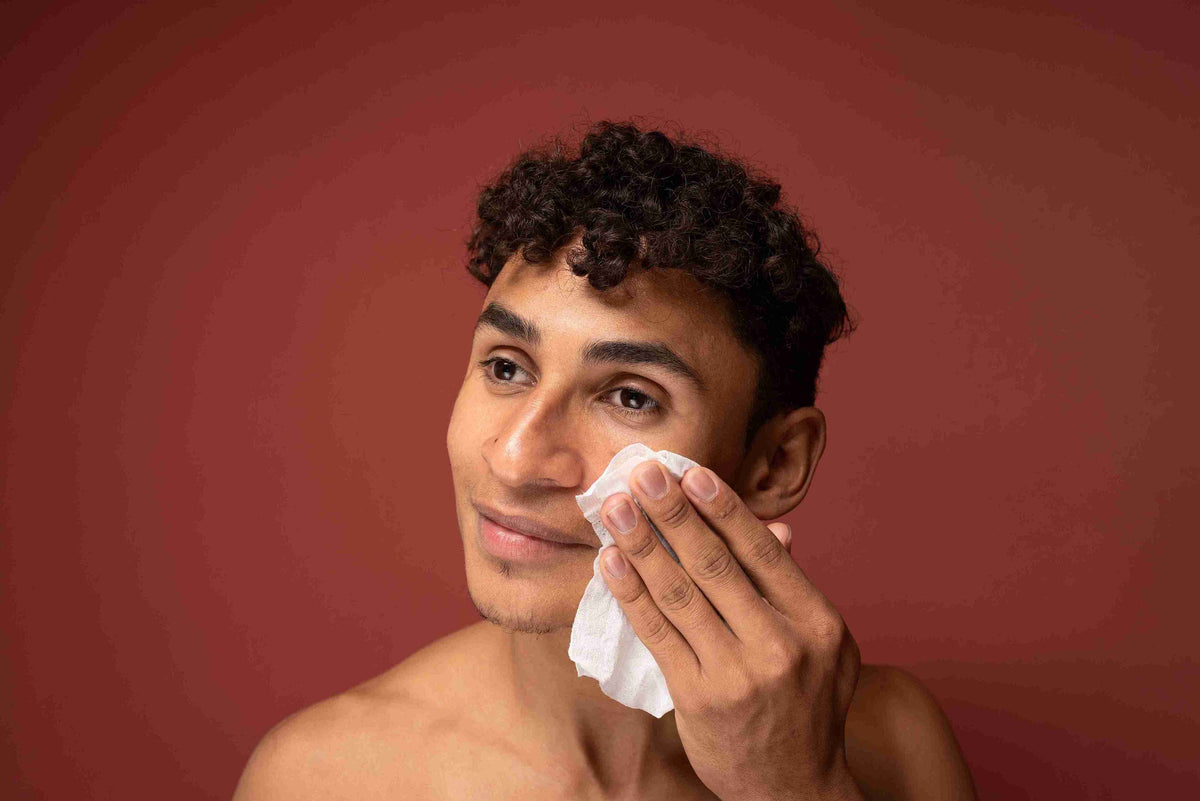
How to remove blackheads safely starts with gentle cleansing, pore-friendly exfoliation, and consistent skincare. Ingredients such as salicylic acid and retinoids can help manage clogged pores, while moisturising and daily sunscreen support the skin barrier. Avoid aggressive squeezing or scrubbing, and consult a dermatologist for persistent or deep congestion.
Blackheads can be managed with a consistent routine that keeps pores clear without stripping the skin. Gentle cleansing, appropriate exfoliation, hydration and sun protection are the foundation. Wildflower Naturals brings botanical ingredients and modern skincare actives together across its face care products for thoughtful everyday care. The key is understanding what your skin needs and giving it time to respond.
What Are Blackheads?
Blackheads are a type of acne called open comedones. They develop when a hair follicle becomes clogged with sebum (oil) and dead skin cells. Because the opening remains exposed to air, the material inside oxidises and appears dark. That colour does not mean the pore is filled with dirt.
They commonly appear around the nose, chin, forehead and sometimes the cheeks. Unlike inflamed pimples, blackheads are generally not painful or swollen, although they can occur alongside other forms of acne.
Blackheads vs Whiteheads
The key difference is whether the clogged pore is open or closed.
- Blackheads: Open comedones with a dark-looking surface.
- Whiteheads: Closed comedones where the pore opening is covered.
Understanding this difference helps you choose skincare more appropriately instead of treating every type of blemish in the same way.
What Causes Blackheads?
Blackheads are usually the result of several factors rather than one single cause. Excess sebum, dead skin cell buildup, hormonal changes and certain skincare or cosmetic products can contribute to clogged follicles.
Excess Oil Production
Sebum is important for keeping skin comfortable and protected, but excess oil can combine with dead skin cells and contribute to pore congestion.
Dead Skin Cell Buildup
When dead cells accumulate around the opening of a follicle, they can mix with sebum and form a clog. Regular, gentle exfoliation can help support smoother-looking skin.
Hormonal Changes
Hormonal fluctuations can influence oil production, which is one reason blackheads and other forms of acne are common during adolescence and can continue into adulthood.
Makeup and Skincare Products
Some rich or pore-clogging products may contribute to congestion in people who are prone to blackheads. Choosing products labelled non-comedogenic can be useful when managing acne-prone skin.
How to Remove Blackheads Safely
If you're wondering how to remove blackheads without irritating your skin, the answer is not to attack the pore aggressively. A consistent routine is more useful than repeatedly squeezing, scrubbing or piling on strong products.
1. Start With a Gentle Cleanser
Cleansing removes excess oil, sunscreen, makeup and everyday impurities from the skin's surface. However, a cleanser should leave your skin comfortable rather than tight or stripped.
The Kumkumadi + Donkey Milk Face Cleanser with Niacinamide & Saffron is designed as a gentle daily cleanser and contains niacinamide and salicylic acid alongside botanical ingredients. Wildflower Naturals describes it as suitable for daily cleansing while helping remove excess oil and impurities.
Use lukewarm water and massage the cleanser gently instead of rubbing your face vigorously.
2. Choose an Appropriate Exfoliating Ingredient
Exfoliation can help remove excess dead skin cells, but more is not necessarily better. Over-exfoliating may leave the skin dry and irritated, making your routine harder to maintain.
Chemical exfoliants such as salicylic acid are commonly recommended for blackheads because they help loosen dead skin and unclog pores. The American Academy of Dermatology also lists salicylic acid among effective non-prescription ingredients for blackheads and whiteheads.
3. Consider Salicylic Acid
Salicylic acid is a beta hydroxy acid (BHA) frequently used for congested and acne-prone skin. It helps exfoliate within pores and can be particularly useful for blackheads.
If you are new to active skincare, introduce one active product at a time and follow its directions. If your skin becomes persistently dry, stinging or irritated, reduce use and consider professional advice.
4. Keep Your Skin Hydrated
A blackhead-focused routine should not be an endless cycle of removing oil. Your skin still needs hydration and barrier support.
Choose a moisturiser that feels comfortable for your skin type and avoid assuming that oily skin does not need hydration. If budget is a consideration, our affordable skin care products collection makes it easier to build a balanced routine without overspending.
5. Try a Clay Mask Occasionally
Clay masks can be useful as an occasional deep-cleansing step, particularly for oily or combination skin. They can absorb excess surface oil and help the skin feel fresh, but they should not be presented as a permanent solution for blackheads.
The Kumkumadi & Donkey Illuminating Clay Mask with Niacinamide + Vitamin C contains kaolin clay and Fuller's Earth and is designed for weekly use. Wildflower Naturals states that it helps absorb excess oil and impurities without leaving the skin feeling overly dry.
6. Consider Professional Extraction
For stubborn or deep blackheads, professional extraction may be safer than trying to force the clog out at home. Dermatologists or trained skin professionals can assess the skin and use appropriate extraction techniques.
Deep blackheads are less likely to disappear on their own, and repeated squeezing can cause irritation, inflammation and potentially scarring.
7. Stay Consistent
The most useful answer to how to remove blackheads is consistency. Skin congestion develops over time, so expecting an overnight transformation can encourage over-treatment.
Give a new routine enough time to work, introduce actives gradually and avoid changing several products at once. The American Academy of Dermatology recommends giving an acne treatment time to work rather than continually switching between products.
How to Remove Blackheads From the Nose and Cheeks
The nose and cheeks can require slightly different approaches because skin type, oil production, makeup use and sensitivity vary from person to person.
Blackheads on the Nose
The nose is often oilier than other parts of the face. A gentle cleanser followed by an appropriate pore-clearing active can help manage congestion. If you're building a routine for the men in your household, this men's face care routine guide addresses similar oil-control concerns.
Avoid repeatedly using pore strips as your main strategy. They may provide a temporary smoother appearance but do not address the processes that create clogged pores.
Blackheads on the Cheeks
Cheek congestion can be influenced by makeup, skincare products, friction and frequent touching. Keep the routine simple and pay attention to whether a new product coincides with increased congestion. For a routine tailored to these concerns, see our guide on a face care routine for women.
Do not assume every tiny bump on the cheek is a blackhead. If the bumps are persistent, itchy, painful or inflamed, a dermatologist can help identify what you are actually dealing with.
What Ingredients Help With Blackheads?
Knowing which ingredients have a specific purpose can make your skincare routine much easier to manage.
|
Ingredient |
Potential role |
|
Salicylic acid |
Helps exfoliate and unclog pores |
|
Retinoids |
Help prevent clogged pores and manage comedones |
|
Niacinamide |
Supports the skin barrier and improves the appearance of pores and uneven tone |
|
Clay |
Helps absorb excess surface oil |
|
AHAs |
Exfoliate the skin's surface |
|
Hyaluronic acid |
Supports skin hydration |
Salicylic acid and retinoids have stronger evidence for managing comedonal acne than many popular DIY remedies. Retinoids can help clear blackheads and prevent new comedones, although they may cause dryness or irritation and should be used appropriately.
Can Natural Remedies Help With Blackheads?
Natural skincare can be part of a thoughtful routine, but "natural" does not automatically mean effective or suitable for every skin type.
Some botanical ingredients can support cleansing, hydration or overall skin comfort, and our organic face care products are formulated with this balance in mind. However, replacing evidence-based acne ingredients with untested DIY combinations may not be helpful.
This is where a balanced approach makes sense: choose gentle formulations, understand the role of each ingredient and avoid remedies that irritate your skin. If blackheads are persistent, professional advice is more useful than repeatedly experimenting at home.
A Simple Skincare Routine for Blackhead-Prone Skin
A practical routine does not need ten different products. For a broader framework you can adapt, this guide to a daily face care routine covers the essentials step by step.
Morning
- Cleanse: Use the Kumkumadi + Donkey Milk Face Cleanser with Niacinamide & Saffron.
- Tone: The Apple Cider Vinegar Face Toner (Normal to Oily Skin) can be incorporated according to your skin's tolerance and routine. Wildflower Naturals positions it as a clarifying toner for normal-to-oily skin.
- Hydrate: Apply a lightweight moisturiser suited to your skin type.
- Protect: Finish with the Kumkumadi & Donkey Milk SPF 50 Dew Drops Invisible Sunscreen with Hyaluronic acid + UVA + UVB + PA+++ Protection + Water Resistant. The product is designed as a daily sunscreen-moisturiser with SPF 50 PA+++ protection and hydration.
Evening
Cleanse thoroughly, use your chosen active according to its instructions, moisturise and keep the rest of the routine uncomplicated.
Once or twice a week, depending on your skin's needs and tolerance, the Kumkumadi & Donkey Illuminating Clay Mask with Niacinamide + Vitamin C can be used as a weekly cleansing step.
What Not to Do When You Have Blackheads
Knowing how to remove blackheads also means knowing what to avoid.
- Do not squeeze aggressively. Pressure can irritate the surrounding skin and may push the contents deeper.
- Do not scrub repeatedly. Excessive exfoliation can cause dryness and irritation.
- Do not introduce several strong actives at once. You may not know which product is irritating.
- Do not skip moisturiser. Hydration remains important even for oily skin.
- Do not expect instant results. Consistency matters more than aggressive treatment.
How to Prevent Blackheads From Coming Back
Complete prevention is not always possible, especially when hormones and individual skin biology play a role. Still, several habits can help manage recurring congestion.
Cleanse regularly, remove makeup before bed, choose non-comedogenic products, avoid unnecessary touching and keep your routine consistent. Moisturiser and daily sunscreen also remain important parts of healthy skincare.
If you notice that congestion repeatedly appears after introducing a particular product, consider simplifying your routine and observing how your skin responds.
How Long Does It Take to Get Rid of Blackheads?
There is no universal timeline. Surface congestion may look better relatively quickly, while recurring or deeper blackheads can require several weeks of consistent care.
Avoid changing products every few days because you are not seeing immediate results. If blackheads remain persistent despite a well-tolerated routine, a dermatologist can recommend a more targeted approach.
When Should You See a Dermatologist?
Consider professional advice if your blackheads are persistent, deep, widespread or accompanied by painful or inflamed acne. A dermatologist can determine whether you are dealing with ordinary blackheads, another type of acne or a different skin concern.
Professional guidance is particularly important if your skin is becoming irritated from repeated exfoliation or multiple active ingredients.
Build a More Thoughtful Skincare Routine With Wildflower Naturals
Learning how to remove blackheads is less about finding one miracle product and more about creating a routine your skin can tolerate and maintain. Gentle cleansing, targeted ingredients, hydration and daily protection provide a stronger foundation than aggressive pore-picking or endless product switching.
Wildflower Naturals brings botanical ingredients together with modern skincare actives to create considered everyday formulations. If you are ready to simplify your routine, explore Kumkumadi + Donkey Milk Face Cleanser with Niacinamide & Saffron, Apple Cider Vinegar Face Toner (Normal to Oily Skin), Kumkumadi & Donkey Illuminating Clay Mask with Niacinamide + Vitamin C, and Kumkumadi & Donkey Milk SPF 50 Dew Drops Invisible Sunscreen with Hyaluronic acid + UVA + UVB + PA+++ Protection + Water Resistant as part of a routine tailored to your skin.
Your skin does not need more products; it needs the right care, used consistently. Discover Wildflower Naturals and make your everyday skincare ritual a little more thoughtful.
Frequently Asked Questions
Q1. How can I remove blackheads naturally?
Gentle cleansing, appropriate exfoliation, and consistent hydration can support clearer-looking skin. Natural ingredients may complement a routine, but persistent blackheads may respond better to proven ingredients such as salicylic acid or retinoids. Avoid harsh DIY scrubs and aggressive squeezing.
Q2. Can I remove blackheads permanently?
Blackheads can be managed effectively, but there is no guaranteed permanent removal method because pores can become clogged again. Consistent skincare can reduce recurring congestion, while a dermatologist can recommend stronger treatment for persistent cases.
Q3. Is it safe to squeeze blackheads?
It is better to avoid squeezing them yourself. Applying too much pressure can irritate the skin, cause inflammation and increase the risk of skin damage or scarring. Professional extraction is a safer option for stubborn or deep blackheads.
Q4. Will salicylic acid remove blackheads?
Salicylic acid can help loosen dead skin and unclog pores, making it a commonly recommended ingredient for blackheads. Use it according to the product directions and introduce it gradually if your skin is sensitive.
Q5. What is the best skincare routine for blackheads?
A simple routine usually works best: gentle cleansing, an appropriate pore-clearing active, moisturiser and daily sunscreen. Avoid using several exfoliating products together, and adjust the routine according to your skin's tolerance.
Q6. Why do my blackheads keep coming back?
Blackheads can recur because sebum production, dead skin buildup, and hormonal changes continue over time. Skincare can manage congestion, but it does not permanently change how your pores produce oil. Consistency is therefore more useful than occasional intensive treatments.
Q7. How do I remove blackheads from my nose?
Use a gentle cleanser and a suitable pore-clearing active such as salicylic acid, while avoiding aggressive scrubbing or repeated squeezing. If congestion is deep or persistent, professional extraction may be appropriate.
Q8. Can clay masks help with blackheads?
Clay masks can help absorb excess surface oil and impurities, making them a useful occasional addition to a routine. They should complement, not replace, a consistent skincare routine designed around your skin's needs.





Leave a comment
This site is protected by hCaptcha and the hCaptcha Privacy Policy and Terms of Service apply.