


Retinol serum benefits include smoother-looking skin, improved texture, softer-looking fine lines and a more even-looking complexion. Retinol is a vitamin A derivative that supports skin-cell turnover and is commonly used for signs of ageing, uneven tone and acne-prone skin. Results require consistent use, patience and daily sun protection.
Retinol serum benefits make this vitamin A ingredient a popular choice for improving texture, fine lines and uneven-looking skin. Used thoughtfully, retinol can become a valuable part of a balanced routine. Wildflower Naturals offers complementary face care products for hydration, nourishment and sun protection. Before adding another active, understand what retinol really does, and how to use it well.
What Is Retinol Serum?
Retinol is a form of vitamin A used in topical skincare. It belongs to the broader retinoid family and is available in many over-the-counter creams and serums. The American Academy of Dermatology notes that retinol is commonly used to improve uneven skin tone, pigmentation and texture, while retinoids more broadly are used for concerns including acne and fine lines.
Retinol is not the same as every prescription retinoid. Prescription ingredients can be stronger and may be used for specific medical concerns. If you have persistent acne, significant pigmentation or another skin condition, a dermatologist can help determine which option is appropriate.
How Does Retinol Work on Skin?
Retinol is converted in the skin into active retinoid forms. It supports skin-cell turnover and can influence processes involved in collagen production. Over time, this can contribute to smoother texture, a more even-looking complexion and softer-looking fine lines.
It is not an overnight ingredient. The goal is gradual improvement through consistent use rather than applying more product to force faster results.
What Are the Benefits of Retinol Serum?
The most useful way to understand retinol serum benefits is to look at the skin concerns it may help address.
Helps Reduce the Appearance of Fine Lines and Wrinkles
Retinol is widely used in skincare aimed at visible signs of ageing. With consistent use, it can help reduce the appearance of fine lines and wrinkles by supporting skin renewal and collagen production.
Think of it as a long-term skincare ingredient, not an instant line eraser. Consistency matters more than applying a large amount.
Improves the Look of Skin Texture
If your complexion feels rough, uneven, or less smooth than it once did, retinol may help. By supporting skin-cell turnover, it can encourage a fresher-looking surface and improve the appearance of uneven texture.
This is one reason retinol is often included in routines designed for smoother, more refined-looking skin.
Helps Improve Uneven Skin Tone and Dark Spots
Retinol can be useful for people concerned about uneven-looking pigmentation and dark spots. It supports skin renewal and can help create a more uniform-looking complexion over time.
However, pigmentation can have many causes. Persistent or changing dark patches deserve professional evaluation rather than relying on a cosmetic routine alone.
Can Support Acne-Prone Skin
Retinoids are well established in acne care because they can help prevent pores from becoming clogged. Retinol is a milder, over-the-counter member of the retinoid family, so it may be considered by people who want to address mild breakouts alongside texture and tone concerns.
For moderate or severe acne, painful breakouts or scarring, professional dermatological guidance is a better route. If you're deciding what to pair retinol with, this guide on which serum is best for acne prone skin can help.
Makes Pores Look Less Noticeable
Retinol does not permanently shrink pore size. Instead, smoother texture and better control of congestion can make pores appear less prominent.
This distinction matters because good skincare advice should describe what an ingredient can realistically do rather than promise permanent structural changes. If enlarged pores are your main concern, this guide on open pores treatment goes into more targeted options.
Supports a Fresher, More Radiant Appearance
As skin turnover and texture improve, the complexion may look fresher and more even. This can contribute to the healthy-looking glow people often associate with a well-managed routine.
How to Use Retinol Serum on Your Face
Using retinol correctly is just as important as choosing it.
- Cleanse gently: Wash your face and pat it dry.
- Apply a small amount: Follow the product's directions rather than assuming more is better.
- Moisturise: Follow with a moisturiser if your skin needs additional comfort.
- Protect your skin: Use broad-spectrum sunscreen every morning.
The American Academy of Dermatology recommends introducing retinoids gradually when irritation is a concern and protecting skin from the sun during the day.
How Often Should You Use Retinol?
There is no single schedule for everyone. Beginners can start slowly, such as a few evenings per week, depending on the product instructions and their skin's tolerance. If the skin remains comfortable, frequency can be increased gradually.
More is not better. Using too much or too frequently can increase dryness, redness and peeling without making results arrive faster.
What Are the Side Effects of Retinol?
Common early reactions can include dryness, redness, peeling, tightness or mild irritation. These effects may be more noticeable when you first introduce retinol or combine it with several other strong actives.
If irritation becomes persistent, painful or severe, stop using the product and seek advice from a dermatologist. People with very sensitive, inflamed or compromised skin should also get professional guidance before starting a retinoid product.
How Can You Reduce Retinol Irritation?
Keep the rest of your routine simple while your skin adjusts.
- Start with a modest frequency.
- Use only the amount recommended on the label.
- Moisturise regularly.
- Avoid introducing several strong actives at once.
- Wear broad-spectrum sunscreen during the day.
- Give your skin time to adapt before increasing frequency.
The AAD specifically recommends starting slowly and using moisturiser to help reduce irritation when introducing retinoids.
Can You Use Retinol With Other Skincare Ingredients?
Yes, but the combination should be thoughtful. Hydrating ingredients such as hyaluronic acid can fit comfortably into a routine, while niacinamide is commonly used alongside retinoids as part of a barrier-conscious approach.
At the same time, introducing several potentially irritating actives together can make it difficult to identify what your skin is reacting to. When starting retinol, simplicity is usually the smarter approach.
Retinol for Different Skin Types
Oily Skin
Choose lightweight, non-comedogenic products like our face serum for oily skin range to keep the routine comfortable without unnecessary heaviness.
Dry Skin
Prioritise moisturisation and introduce retinol gradually. Our face serum for dry skin range can help support comfort as your skin adjusts.
Combination Skin
Keep the routine balanced rather than treating every area identically. Hydrate drier areas while choosing lightweight products for oilier zones.
Sensitive Skin
Go slowly and consider professional advice before starting. If your skin is already irritated or inflamed, adding another active may increase discomfort.
Acne-Prone Skin
Retinoid ingredients can play a role in acne management, but persistent, severe or scarring acne should be assessed by a dermatologist.
When Will You See Results?
Retinol works gradually. Some people notice changes in skin feel or texture before more visible improvements become apparent. Fine lines, uneven tone and other concerns can take weeks or longer to improve, and continued use is important. Mayo Clinic also notes that wrinkle-related improvements from retinoid products may take weeks or months.
Avoid judging a product after only a few applications. Skincare is usually a process of consistent habits rather than dramatic overnight changes.
What Should a Simple Retinol Routine Look Like?
A straightforward routine is often easier to maintain.
Night
Cleanser → Retinol → Moisturiser
Morning
Cleanser → Hydrating or targeted serum → Moisturiser → Sunscreen
For the morning step, many people pair retinol with an antioxidant, and this overview of vitamin c serum benefits explains why that combination works well.
Wildflower Naturals can complement this kind of routine with products chosen for hydration, nourishment, and daily protection. Kumkumadi & Donkey Milk Brightening Face Cream with Hyaluronic acid + Rosehip oil combines hyaluronic acid, rosehip oil, niacinamide and aloe vera to moisturise and support healthy-looking skin.
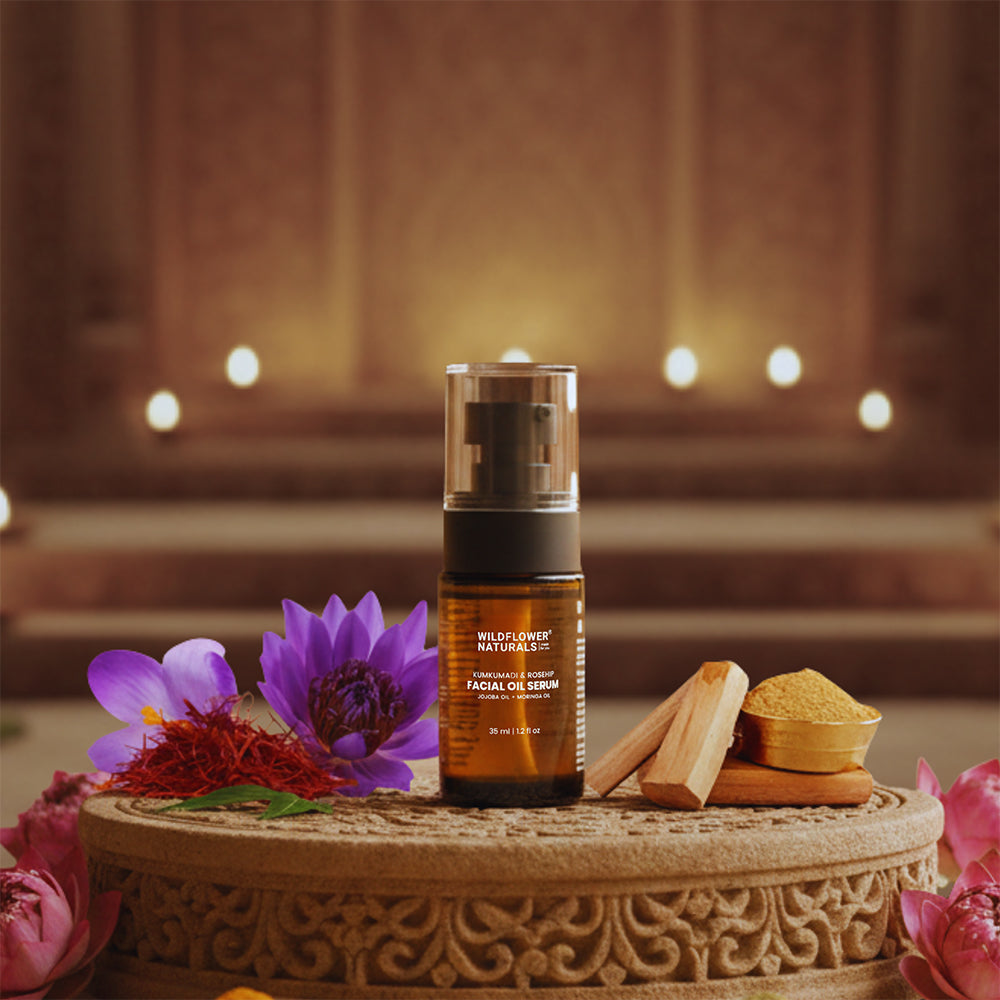
For nourishment, Kumkumadi & Rosehip Facial Oil Serum with Jojoba oil + Moringa oil is formulated with botanical oils and is designed to replenish moisture while leaving skin feeling soft and smooth.
For daytime protection, Kumkumadi & Donkey Milk SPF 50 Dew Drops Invisible Sunscreen with Hyaluronic acid + UVA + UVB + PA+++ Protection + Water Resistant provides SPF 50 PA+++ protection alongside hydration.
These products are not retinol treatments. They simply serve different roles in a balanced skincare routine.
Is Retinol Suitable for Everyone?
Not necessarily. Retinol may be useful for many people, but individual skin condition, sensitivity, and other treatments matter.
Topical retinoids should be avoided during pregnancy. If you are pregnant, planning pregnancy or unsure which skincare ingredients are appropriate, speak with your healthcare professional. ACOG also recommends avoiding topical retinoids during pregnancy.
People using prescription acne medicines or other strong actives should also check with a dermatologist before adding retinol.
Why Does Consistency Matter More Than Using More?
Retinol is a long-game ingredient. Applying a larger amount will not necessarily accelerate results and may simply increase irritation. A routine that you can use consistently and comfortably is more useful than an aggressive routine that leaves your skin struggling.
That is the real takeaway: choose an appropriate product, introduce it slowly, moisturise, protect your skin from the sun and give the ingredient time to work.
Final Thoughts: Are Retinol Serum Benefits Worth It?
For many skincare users, retinol can be a worthwhile addition when the goal is smoother texture, more even-looking tone, clearer-looking pores and softer-looking fine lines. The key is not intensity; it is consistency, patience and a supportive routine.
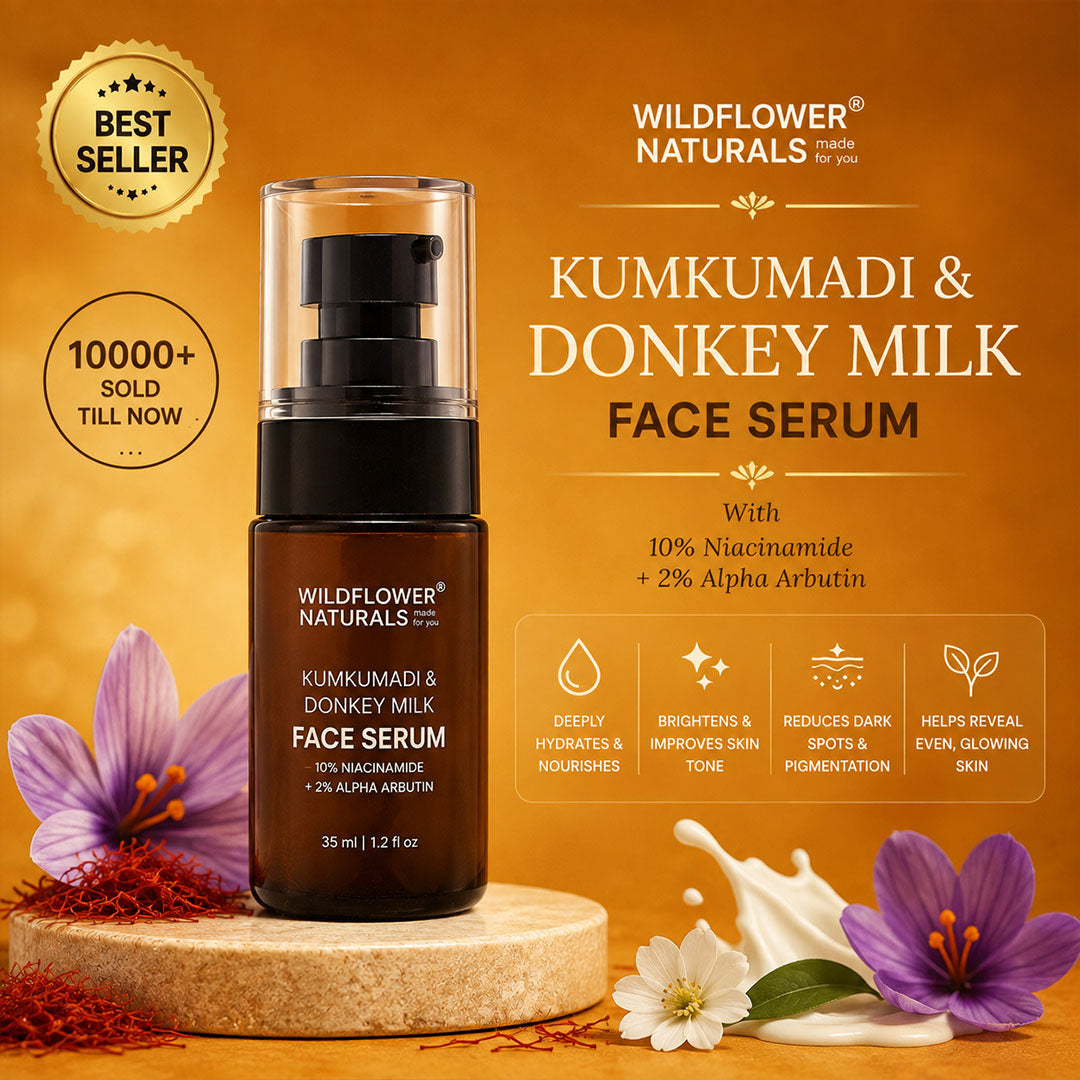
If you want to build that routine with thoughtfully formulated skincare, explore Wildflower Naturals and discover products such as Kumkumadi & Donkey Milk Face Serum with 10% Niacinamide & 2% Alpha Arbutin, Kumkumadi & Donkey Milk Brightening Face Cream with Hyaluronic acid + Rosehip oil, and Kumkumadi & Donkey Milk SPF 50 Dew Drops Invisible Sunscreen with Hyaluronic acid + UVA + UVB + PA+++ Protection + Water Resistant. Choose complementary care that works with your routine, not against it.
Your skincare routine does not need more steps, it needs the right ones, used consistently.
Frequently Asked Questions
Q1. How should beginners use retinol?
Beginners should introduce retinol gradually, use the amount directed on the label, moisturise and wear sunscreen every day. Increase frequency only if the skin remains comfortable.
Q2. Can retinol help with acne?
Yes. Retinoid ingredients can help keep pores clear and are used in acne treatment. For persistent or moderate-to-severe acne, consult a dermatologist rather than relying only on cosmetic retinol.
Q3. Is retinol good for wrinkles?
Yes. Retinol is commonly used to improve the appearance of fine lines and wrinkles through effects on skin renewal and collagen-related processes. Results require consistent use.
Q4. Will retinol remove dark spots?
Retinol can help improve the appearance of uneven pigmentation over time, but it does not guarantee that every dark spot will disappear. Persistent or changing pigmentation should be assessed professionally.
Q5. What should you use after retinol?
A moisturiser is a simple choice after retinol, particularly if your skin feels dry. During the day, finish with broad-spectrum sunscreen.
Q6. Why does retinol cause peeling?
Peeling can occur because retinol can initially irritate the skin while supporting changes in cell turnover. Reducing frequency, moisturising and introducing it gradually can help.
Q7. How long does it take to see retinol serum benefits?
Visible improvements vary by person, product and skin concern. Consistent use over several weeks or longer is more realistic than expecting immediate results.
Q8. Can you use retinol every night?
Some people eventually tolerate nightly use, but beginners do not need to start there. Follow the product instructions and increase frequency gradually according to your skin's response.


Leave a comment
This site is protected by hCaptcha and the hCaptcha Privacy Policy and Terms of Service apply.