

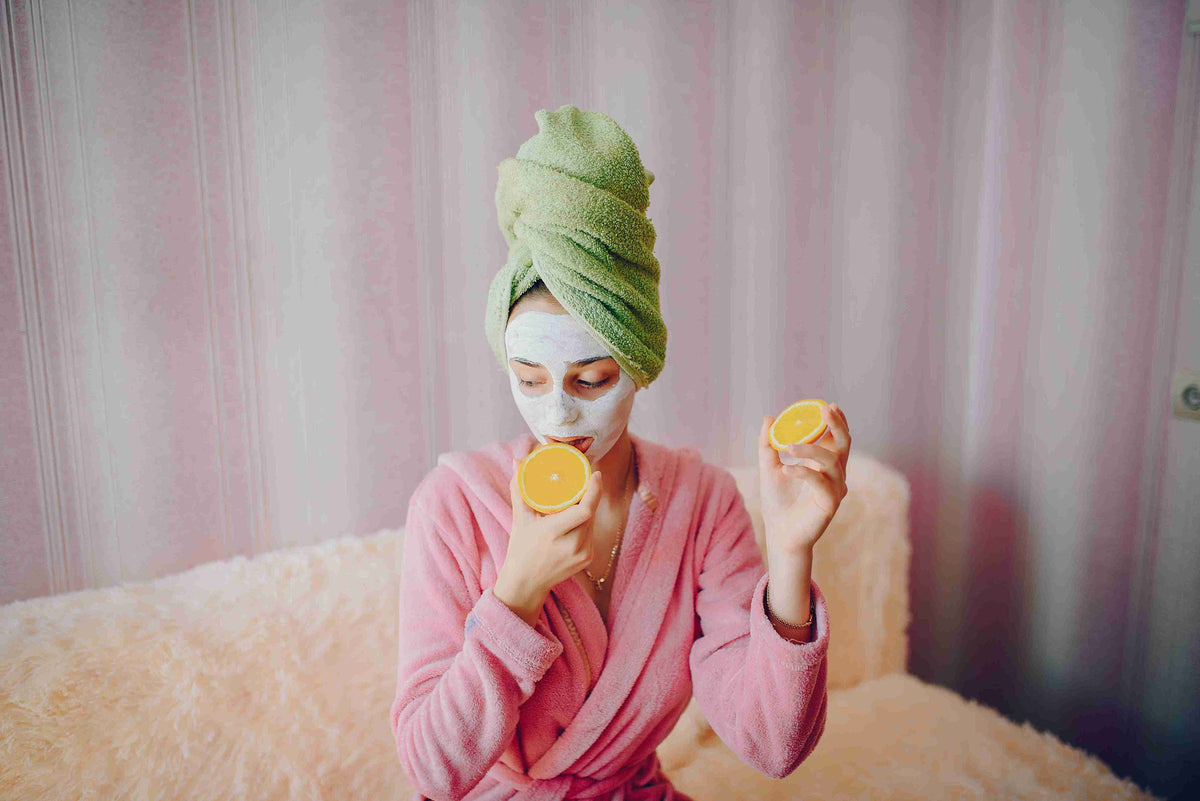
Tan removal home remedies can help soothe sun-exposed skin and support a more even-looking complexion when used consistently. Aloe vera, yogurt, besan, papaya and cucumber are commonly used options. However, tan fades gradually, and daily sunscreen, gentle skincare, and avoiding excessive sun exposure are essential for preventing further tanning.
Tan removal home remedies such as aloe vera, yogurt, besan and papaya can support gentle care for sun-exposed, tanned skin. The key is consistency rather than overnight results. Wildflower Naturals complements this approach with botanical-led organic face care products designed around hydration, radiance and everyday skin protection. But before choosing a remedy, it helps to understand what causes a tan in the first place.
What Causes Sun Tan on the Face?
A sun tan develops when your skin responds to ultraviolet (UV) radiation by producing more melanin, the pigment responsible for skin colour. This natural response helps protect the skin from UV exposure, but it can leave exposed areas looking darker or uneven in tone.
The face is particularly prone to tanning because it is exposed to sunlight throughout the year. The forehead, cheeks, nose and other uncovered areas can gradually develop a deeper-looking tone, especially after prolonged outdoor activity.
This is why tan removal home remedies should be viewed as part of a broader skincare routine rather than a quick way to change your natural skin tone. The goal is to support the skin as it naturally renews while protecting it from repeated UV exposure.
Why Does Facial Tan Look Uneven?
Tan does not always develop uniformly. Areas that receive more direct sunlight may appear darker, while covered or less exposed areas retain their usual tone. Frequent outdoor exposure, inconsistent sunscreen use and environmental factors can make this difference more noticeable.
If darkening persists, becomes patchy or looks different from ordinary tanning, it is better to consult a dermatologist rather than assuming it is simply sun tan.
How Long Does a Sun Tan Take to Fade?
There is no fixed number of days for a tan to disappear. The timeline depends on factors such as the intensity of sun exposure, individual skin renewal, how frequently you are outdoors and whether you continue exposing your skin to UV radiation.
Gentle skincare can support the skin while it naturally renews. In contrast, aggressive scrubbing or repeatedly using strong DIY ingredients can irritate the skin and make your routine harder to maintain.
The most effective approach combines gentle care with prevention. Once you stop adding repeated UV exposure to already tanned skin, your complexion can gradually return closer to its usual appearance. If you're curious whether your daily SPF is doing enough on its own, this guide on does sunscreen prevent tanning covers it in detail.
7 Tan Removal Home Remedies to Try at Home
If you prefer simple skincare rituals, several kitchen and botanical ingredients can be incorporated into your routine. Remember that natural does not automatically mean suitable for every skin type. Always patch-test a new ingredient and stop if you experience burning, persistent redness or irritation.
1. Aloe Vera for Sun-Exposed Skin
Aloe vera is one of the simplest options for skin that feels warm, dry or uncomfortable after sun exposure. Its lightweight, hydrating feel makes it particularly useful when your priority is soothing and replenishing moisture.
Apply a thin layer of plain aloe vera gel to clean skin and leave it on according to the product or ingredient instructions. Avoid applying it to broken or severely irritated skin.
Aloe vera does not instantly erase a tan, but it can be a comforting addition to a gentle post-sun skincare routine.
2. Yogurt and Turmeric Face Pack
Yogurt is traditionally used in homemade skincare because it contains lactic acid, while turmeric has a long history in Indian beauty rituals.
For a simple face pack, combine a small amount of plain yogurt with a pinch of turmeric. Apply a thin layer, leave it on briefly and rinse gently with lukewarm water.
Among tan removal home remedies, this combination is better approached as a gentle skincare ritual rather than a guaranteed tan-erasing treatment. Avoid it if either ingredient irritates your skin.
3. Besan and Rose Water
Besan, or gram flour, has long been used in traditional Indian ubtan rituals. Mixed with rose water, it creates a simple paste that can be used as a cleansing and exfoliating face pack.
Mix besan with enough rose water to create a smooth paste. Apply gently without rubbing aggressively. Once it begins to dry, rinse it off with water.
The important point is moderation. Scrubbing harder will not make a tan disappear faster and may leave the skin feeling irritated.
4. Papaya for a Gentle Brightening Ritual
Papaya contains naturally occurring enzymes and is commonly included in traditional and modern skincare routines.
Mash a small amount of ripe papaya into a smooth pulp and apply a thin layer to clean skin. Keep the application gentle and rinse thoroughly.
If your skin is sensitive, introduce papaya cautiously. Fresh fruit preparations can vary in acidity and potency, so discontinue use if your skin feels uncomfortable.
5. Cucumber for a Cooling Skincare Step
Cucumber is particularly appealing after spending time outdoors because of its refreshing, water-rich nature.
Blend or grate fresh cucumber and apply it as a short, soothing mask. Alternatively, chilled cucumber slices can provide a simple cooling experience.
This is best considered a hydration and comfort step rather than a direct pigmentation treatment. It can complement a broader skincare routine when your skin feels tired after sun exposure.
6. Honey for Hydration
Honey can be used as a simple hydrating ingredient in occasional face masks. Its naturally emollient feel can help leave the skin feeling softer.
Apply a thin layer of suitable honey to clean skin, leave it for a short period and rinse thoroughly. Because honey is sticky and may not suit everyone, patch-test before using it on the entire face.
For dehydrated skin, hydration can make the complexion appear fresher while the skin naturally renews.
7. Aloe Vera with a Consistent Brightening Routine
Rather than relying entirely on a single DIY ingredient, consider using soothing home care alongside a consistent skincare routine.
This is where tan removal home remedies become more useful when viewed realistically. A gentle routine can address hydration and overall skin comfort, while a well-formulated skin brightening cream can target concerns such as dullness and uneven-looking tone more consistently.
Which Remedy Is Best for Your Skin Type?
Your skin type should influence the kind of remedy you choose.
|
Skin Type |
Suitable Approach |
What to Prioritise |
|
Dry skin |
Hydrating masks |
Aloe vera, honey and moisturisation |
|
Oily skin |
Lightweight care |
Gentle cleansing and non-heavy hydration |
|
Combination skin |
Balanced routine |
Lightweight hydration with targeted care |
|
Sensitive skin |
Minimal ingredients |
Soothing products and patch testing |
|
Dull-looking skin |
Brightening routine |
Consistent skincare and sun protection |
If your skin is sensitive, simpler is usually better. Introducing several DIY ingredients at once makes it difficult to identify what caused irritation.
How to Build a Skincare Routine for Tanned Skin
Home remedies can be occasional additions, but a consistent daily routine is more important for long-term skin care.
Step 1: Cleanse Gently
Use a gentle cleanser to remove sweat, sunscreen and everyday impurities. Avoid harsh scrubbing, particularly after prolonged sun exposure.
Step 2: Choose a Suitable Toner
If toner works well for your skin, Wildflower Naturals' Apple Cider Vinegar Face Toner can be incorporated into a suitable routine.
Step 3: Add a Targeted Serum
For dullness and uneven-looking tone, consider Kumkumadi & Donkey Milk Face Serum with 10% Niacinamide & 2% Alpha Arbutin as part of a consistent skincare routine.
Niacinamide and alpha arbutin are commonly used in formulations designed to support a more even-looking complexion.
Step 4: Moisturise
A moisturiser helps maintain comfortable, hydrated skin, and a skin glow cream like the Kumkumadi & Donkey Milk Brightening Face Cream with Hyaluronic Acid + Rosehip Oil can be used as part of a hydration-focused routine.
Step 5: Protect Your Skin During the Day
This is arguably the most important step. Kumkumadi & Donkey Milk SPF 50 Dew Drops Invisible Sunscreen can be used as the final daytime skincare step to help protect exposed skin from UV radiation.
Using sunscreen consistently also makes your efforts around tan removal home remedies more meaningful because you are reducing repeated sun exposure that can contribute to further tanning.
Can Home Remedies Remove Tan Permanently?
No single home remedy can guarantee permanent tan removal. A tan is a biological response to UV exposure, and continued exposure can cause the skin to produce more melanin again.
Instead of looking for an overnight or permanent solution, focus on reducing repeated sun exposure, using sunscreen consistently and maintaining a gentle skincare routine. If you're wondering whether SPF can actually undo existing tan, this guide on does sunscreen remove tan addresses that directly.
It is also important to distinguish between ordinary tanning and persistent pigmentation. If darker patches remain for a long time despite appropriate sun protection, professional evaluation may be more appropriate than trying increasingly strong DIY remedies.
Natural Ingredients to Look for in Tan-Focused Skincare
When selecting formulated skincare, look for ingredients that serve a clear purpose.
- Aloe vera can provide lightweight hydration and soothing care.
- Niacinamide is widely used to support the skin barrier and improve the appearance of uneven tone.
- Alpha arbutin is commonly included in brightening formulations targeting the appearance of pigmentation.
- Vitamin C provides antioxidant support and is frequently used in radiance-focused skincare.
- Kumkumadi oil is a traditional botanical ingredient used in Indian-inspired skincare formulations.
- Rosehip oil provides nourishing, conditioning properties and can complement moisturising routines.
The advantage of a formulated product is consistency. Rather than creating a different DIY mixture every few days, you can follow a routine with clearly defined products and ingredients.
What Should You Avoid When Removing a Tan?
Some popular DIY approaches can be unnecessarily harsh. Avoid aggressively scrubbing the face or repeatedly exfoliating in an attempt to make the tan disappear faster.
Be especially cautious with undiluted lemon juice and other highly acidic kitchen ingredients. They can irritate the skin, particularly when combined with sun exposure.
Also avoid layering several brightening or exfoliating products at once. More products do not necessarily mean faster results.
Good skincare is often about knowing when to stop. If a remedy causes persistent stinging, redness, itching, or discomfort, discontinue it.
How to Prevent Sun Tan from Coming Back
The best tan-removal routine is incomplete without prevention.
Wear Sunscreen Every Day
Apply a broad-spectrum sunscreen to exposed skin every morning, even when the weather appears cloudy.
Reapply When Needed
If you spend extended time outdoors, follow the sunscreen's recommended reapplication instructions.
Use Physical Protection
Hats, umbrellas, sunglasses, clothing and shade can reduce direct sun exposure.
Keep Your Routine Consistent
A simple routine followed consistently is generally more useful than repeatedly switching between different tan removal home remedies.
Avoid Excessive Exfoliation
Exfoliation can be part of skincare, but overdoing it can compromise skin comfort and make your routine counterproductive.
Tan Removal Home Remedies vs. a Complete Skincare Routine
|
Approach |
Main Purpose |
Best Use |
|
Aloe vera |
Soothing and hydration |
After sun exposure |
|
Yogurt mask |
Gentle skincare |
Occasional use |
|
Besan pack |
Traditional cleansing |
Occasional use |
|
Brightening serum |
Targeted skincare |
Consistent routine |
|
Moisturiser |
Hydration |
Daily |
|
Sunscreen |
UV protection |
Every day |
The takeaway is simple: home remedies can complement skincare, but they should not replace sun protection or a well-balanced routine.
When Should You See a Dermatologist?
Not every darkened area is simply a tan. Consider professional advice if pigmentation persists despite consistent sun protection, continues becoming darker, develops suddenly, appears in unusual patterns or is accompanied by irritation or other skin changes.
A dermatologist can determine whether the concern is tanning, post-inflammatory pigmentation, melasma or another skin condition and recommend an appropriate approach.
Give Your Skin a Gentler Way Back to Radiance with Wildflower Naturals
Your skin does not need an aggressive reset after time in the sun. It needs consistency, hydration, thoughtful ingredients and daily protection.
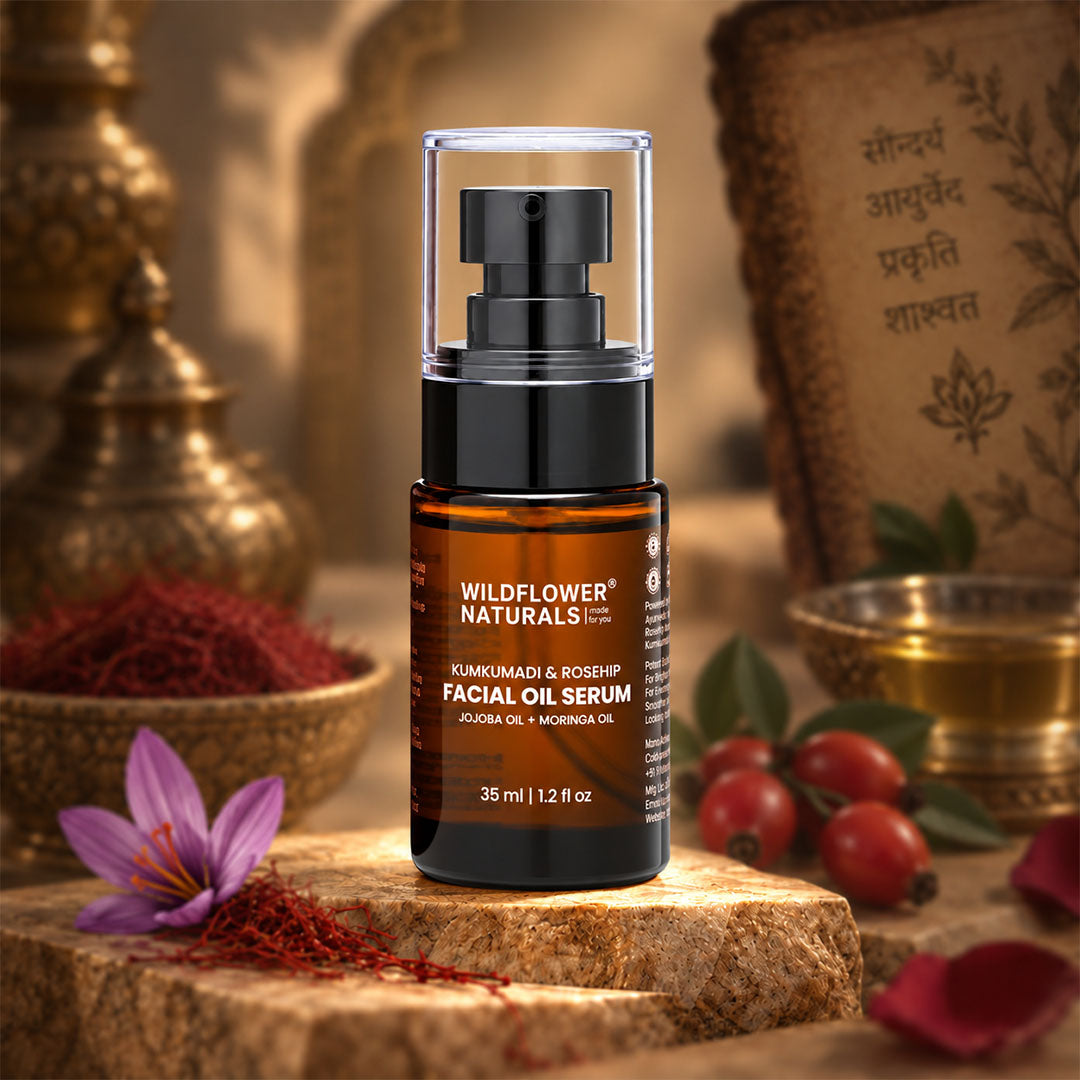
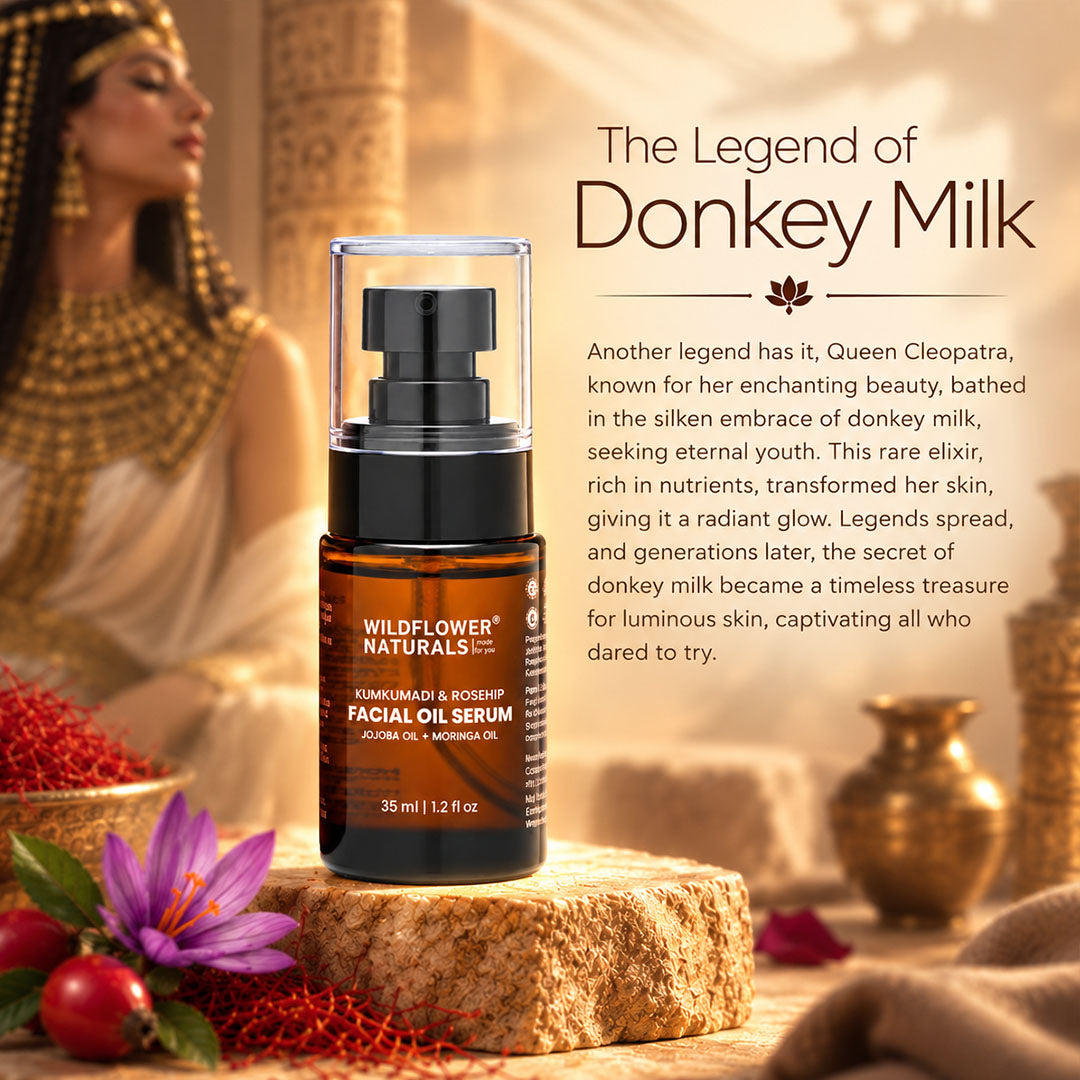
Wildflower Naturals brings these principles together through botanical-led skincare designed to fit naturally into everyday routines. If you want to move beyond occasional tan removal home remedies, explore products such as Kumkumadi & Donkey Milk Face Serum with 10% Niacinamide & 2% Alpha Arbutin, Apple Cider Vinegar Face Toner, and Kumkumadi & Rosehip Facial Oil Serum with Jojoba Oil + Moringa Oil.
Build your routine around what your skin actually needs, protect it from repeated sun exposure, and give it time to return to its natural rhythm. Explore Wildflower Naturals and discover a gentler, more considered approach to everyday skincare.
Frequently Asked Questions
Q1. How can I remove tan from my face naturally?
Use gentle ingredients such as aloe vera or occasional yogurt and besan-based masks, while maintaining daily sunscreen use. Tan fades gradually as the skin naturally renews, so consistency is more important than aggressive exfoliation.
Q2. Can aloe vera help remove sun tan?
Aloe vera can soothe and hydrate sun-exposed skin, but it should not be considered an instant tan remover. It works best as one part of a gentle skincare routine combined with consistent sun protection.
Q3. Is lemon safe for tan removal?
Lemon juice is not recommended as a DIY tan-removal treatment because its acidity can irritate facial skin, particularly before or after sun exposure. Choose gentler skincare ingredients instead.
Q4. Will home remedies remove tan overnight?
No. Tan removal home remedies cannot reliably remove a tan overnight. Skin needs time to naturally renew, while continued UV exposure can prolong tanning. Gentle skincare and consistent sunscreen are more sensible approaches.
Q5. What is the best home remedy for tan removal?
There is no single best remedy for every skin type. Aloe vera is a simple soothing option, while ingredients such as yogurt, besan or papaya can be used occasionally if your skin tolerates them.
Q6. Why does my tan keep coming back?
Repeated UV exposure can trigger additional melanin production, making the skin appear tanned again. Inconsistent sunscreen use, prolonged outdoor exposure and inadequate physical protection can all contribute to recurring tanning.
Q7. How often should I use a tan-removal face pack?
Occasional use is generally preferable to daily application. Overusing masks or exfoliating ingredients can irritate facial skin. Follow the directions for formulated products and adjust DIY use according to your skin's tolerance.
Q8. Can sunscreen help prevent facial tanning?
Yes. Regular use of broad-spectrum sunscreen helps protect skin from UV radiation that contributes to tanning. Reapplication, shade and physical protection are also important when spending extended periods outdoors.



Leave a comment
This site is protected by hCaptcha and the hCaptcha Privacy Policy and Terms of Service apply.