

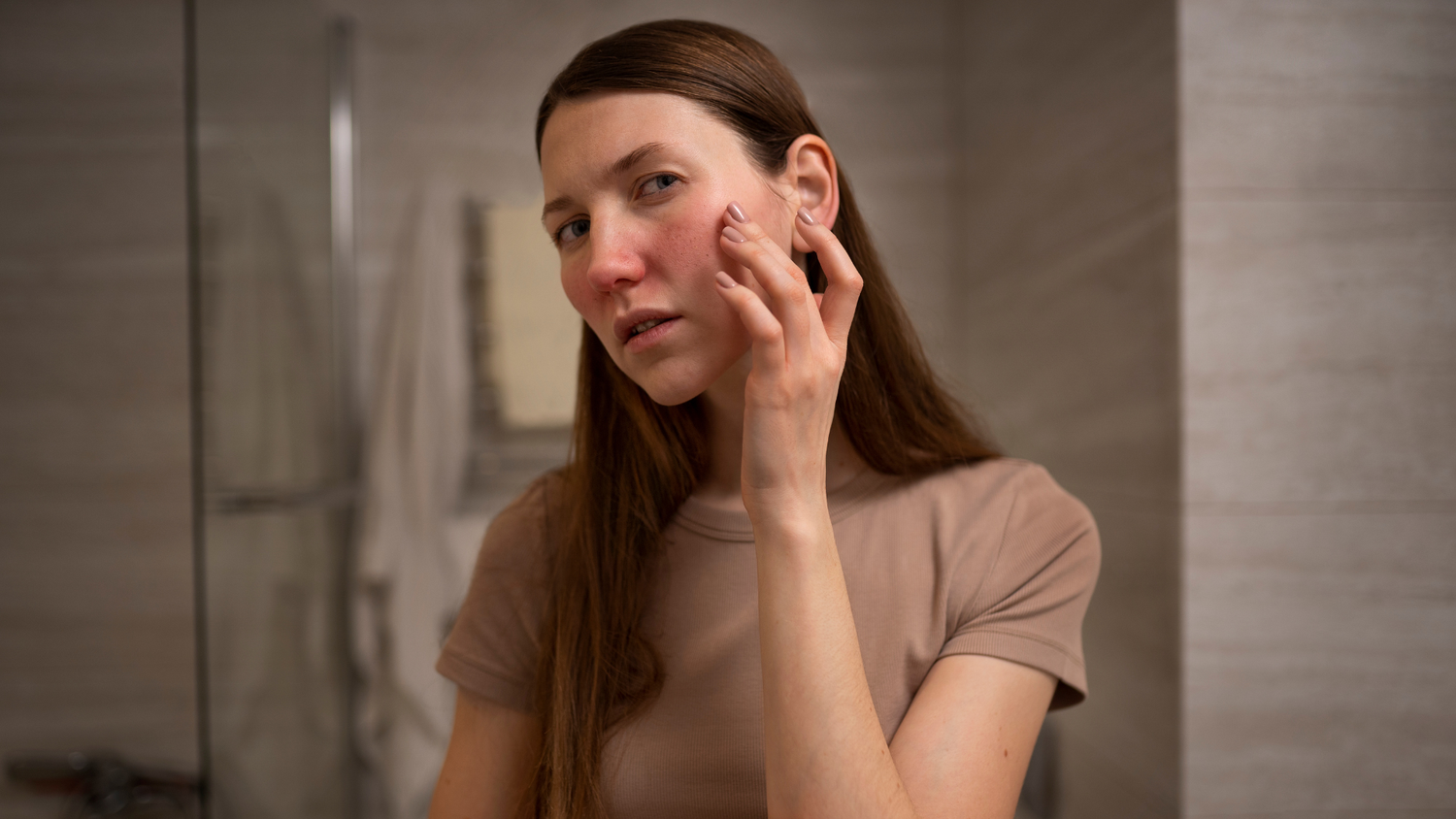
What is acne prone skin? Acne prone skin is skin that is more likely to develop blackheads, whiteheads, pimples, or deeper blemishes because pores clog easily with excess oil, dead skin cells, and bacteria. While anyone can experience occasional breakouts, acne-prone skin tends to break out more frequently and benefits from a consistent, gentle skincare routine that supports the skin barrier.
Acne doesn't always mean your skin is unhealthy—but understanding what is acne prone skin is the first step toward caring for it the right way. At Wildflower Naturals, we believe healthy skin begins with gentle, mindful care rather than harsh treatments. In this guide, you'll learn why acne develops, how to recognize acne-prone skin, and the everyday habits that can help keep your complexion balanced. Let's explore what your skin may be trying to tell you.
What Is Acne Prone Skin?
Simply put, what is acne prone skin? It refers to skin that is naturally more susceptible to recurring breakouts than other skin types. This happens when pores become blocked by excess sebum (oil), dead skin cells, and naturally occurring bacteria on the skin.
Acne-prone skin isn't limited to teenagers. Adults can also experience breakouts due to hormonal fluctuations, stress, environmental factors, or unsuitable skincare products. Choosing the right skin care products for men can make a noticeable difference in managing these adult breakouts.
It's also important to understand that oily skin and acne-prone skin aren't exactly the same. While excess oil often contributes to acne, people with combination or even dry skin can experience persistent breakouts too. In such cases, a face serum for dry skin can help maintain hydration without triggering further congestion.
What Causes Acne Prone Skin?
Several internal and external factors work together to trigger acne. Understanding these causes helps you choose skincare that supports your skin instead of overwhelming it.
Excess Sebum Production
Sebaceous glands naturally produce oil to keep the skin moisturized. When too much sebum is produced, it mixes with dead skin cells and can clog pores, creating an environment where blemishes develop. A well-formulated face serum for oily skin can help regulate this excess oil while keeping skin balanced.
Dead Skin Cell Build-Up
Our skin constantly renews itself. If dead skin cells aren't shed efficiently, they may accumulate inside pores, leading to congestion and breakouts.
Acne-Causing Bacteria
A naturally occurring skin bacterium, Cutibacterium acnes, can multiply within clogged pores, contributing to redness and inflammation.
Hormonal Changes
Hormones play a major role in acne, which is why many skin care products for women are formulated to address hormonal breakouts. Breakouts are commonly linked with:
-
Puberty
-
Menstrual cycles
-
Pregnancy
-
PCOS
-
Stress-related hormonal changes
Lifestyle and Environmental Factors
Several everyday habits may contribute to acne flare-ups:
-
Air pollution
-
Poor sleep quality
-
Chronic stress
-
Heavy or pore-clogging makeup
-
Not removing makeup thoroughly
-
Dirty makeup brushes
-
Friction from helmets or face masks
How Do You Know If You Have Acne Prone Skin?
Wondering what is acne prone skin in everyday life? Your skin may be acne-prone if you regularly notice:
-
Frequent pimples
-
Blackheads
-
Whiteheads
-
Enlarged pores
-
Oily areas, especially the T-zone
-
Recurring breakouts in similar areas
-
Post-acne marks
-
Skin congestion or rough texture
Occasional pimples before an important event don't necessarily mean your skin is acne-prone. Consistent, recurring blemishes are usually a stronger indicator.
Different Types of Acne You May Experience
Not every breakout looks the same. Recognizing different forms of acne helps you better understand your skin.
-
Whiteheads: Closed pores filled with oil and dead skin cells.
-
Blackheads: Open clogged pores that appear dark because the contents oxidize when exposed to air.
-
Papules: Small red, inflamed bumps without visible pus.
-
Pustules: Inflamed pimples that contain pus and often have a white or yellow center.
-
Nodules: Large, firm bumps that develop deeper beneath the skin and can feel painful.
-
Cystic Acne: Deep, inflamed lesions that may take longer to heal and can sometimes leave scars.
What Makes Acne Worse?
Some everyday habits may unintentionally aggravate acne.
These include:
-
Picking or squeezing pimples
-
Washing your face too often
-
Using harsh exfoliants daily
-
Sleeping with makeup on
-
Applying heavy, pore-clogging products
-
Frequently touching your face
-
Frequently changing skincare products without allowing time for results
Consistency is often more beneficial than constantly trying new products.
A Simple Daily Skincare Routine for Acne Prone Skin
Understanding what is acne prone skin also means learning how to care for it gently and consistently.
Step 1: Cleanse Gently
Use a mild cleanser morning and evening to remove excess oil, dirt, and sunscreen without disrupting your skin barrier.
Step 2: Hydrate
A hydrating toner or face mist can help replenish moisture after cleansing and prepare the skin for the next steps.
Step 3: Apply a Lightweight Serum
Depending on your skin's needs, look for ingredients that help balance oil production and support a healthy-looking complexion. A good face serum for women can be tailored to address these specific concerns.
Step 4: Moisturize
Even oily skin benefits from daily hydration. Choose a lightweight, non-comedogenic moisturizer to maintain the skin barrier.
Step 5: Wear Sunscreen Every Morning
Daily sun protection helps protect the skin from UV damage and may reduce the appearance of post-acne marks over time. Pairing sunscreen with which cream is best for pigmentation guidance can further support an even-looking complexion.
Ingredients That Support Acne-Prone Skin
When selecting skincare, look for ingredients that help support balanced skin, including understanding which serum is best for pigmentation if post-acne marks are a concern.
-
Niacinamide – Helps improve the appearance of uneven skin texture and excess oil.
-
Salicylic Acid – Gently exfoliates inside pores.
-
Tea Tree – Popular for supporting clearer-looking skin.
-
Green Tea Extract – Rich in antioxidants that help soothe the skin.
-
Aloe Vera – Provides lightweight hydration and comfort.
-
Centella Asiatica – Helps calm the appearance of redness.
-
Zinc – Often included in formulations designed for oily and blemish-prone skin.
Ingredients to Avoid If Your Skin Breaks Out Easily
Not every ingredient works well for every skin type.
Some people with acne-prone skin may benefit from avoiding:
-
Heavy pore-clogging formulations
-
High amounts of drying alcohol
-
Harsh physical scrubs
-
Overly fragranced skincare
-
Excessive layering of active ingredients
Always introduce new products gradually and patch test when possible.
Lifestyle Tips for Healthier-Looking Skin
Your daily habits matter just as much as your skincare routine.
Helpful practices include:
-
Change pillowcases regularly.
-
Wash makeup brushes frequently.
-
Stay hydrated.
-
Eat a balanced diet.
-
Prioritize quality sleep.
-
Manage stress through exercise or mindfulness.
-
Avoid touching active breakouts.
Healthy skin is often the result of consistent routines rather than quick fixes.
Common Myths About Acne Prone Skin
Let's clear up a few common misconceptions.
Myth: Oily skin doesn't need moisturizer.
Fact: Hydration helps maintain a healthy skin barrier.
Myth: Washing your face repeatedly prevents acne.
Fact: Over-cleansing can strip the skin and may lead to irritation.
Myth: Toothpaste dries out pimples.
Fact: Toothpaste isn't formulated for facial skin and may cause irritation.
Myth: Sun exposure clears acne.
Fact: UV exposure can contribute to skin damage and pigmentation, so learning how to reduce pigmentation safely is important alongside sun protection.
Myth: Acne only affects teenagers.
Fact: Adults of all ages can experience acne.
When Should You See a Dermatologist?
Although many mild breakouts can be managed with consistent skincare, professional advice may be helpful if you experience:
-
Painful cystic acne
-
Persistent breakouts
-
Acne that leaves scars
-
Breakouts affecting your confidence or daily life
-
No improvement after following a suitable routine for several weeks
A dermatologist can recommend an approach tailored to your individual skin concerns.
Conclusion
Understanding what is acne prone skin makes it easier to choose habits and products that work with your skin instead of against it. Acne is influenced by several factors, including oil production, hormones, lifestyle, and skincare choices, so there isn't a one-size-fits-all solution. Gentle cleansing, consistent hydration, sun protection, and patience can all contribute to healthier-looking skin over time. By listening to your skin and maintaining a balanced routine, you can support a clearer, more comfortable complexion.
Discover Gentle Botanical Skincare with Wildflower Naturals
Every skincare journey begins with understanding your skin's unique needs. At Wildflower Naturals, we believe skincare should nourish, protect, and strengthen the skin barrier through thoughtfully crafted formulations inspired by nature and backed by modern skincare science. Whether you're building a simple everyday routine or looking for products that complement acne-prone skin, our botanical-led collection is designed to support healthy-looking skin with gentle, mindful care.
Explore Wildflower Naturals today and discover skincare that helps your skin feel balanced, comfortable, and naturally radiant—one thoughtful ritual at a time.
Frequently Asked Questions
Q1. What is acne prone skin?
Acne-prone skin is skin that develops breakouts more easily because pores are more likely to become clogged with oil, dead skin cells, and bacteria.
Q2. How can I identify acne-prone skin?
If you experience recurring pimples, blackheads, whiteheads, enlarged pores, or frequent congestion rather than occasional breakouts, your skin may be acne-prone.
Q3. Can dry skin be acne prone?
Yes. While oily skin is commonly associated with acne, people with dry or combination skin can also experience breakouts due to hormonal changes, clogged pores, or unsuitable skincare products.
Q4. Can stress make acne worse?
Yes. Stress may influence hormone levels, which can increase oil production and contribute to breakouts in some individuals.
Q5. Is acne-prone skin permanent?
Not necessarily. Acne patterns often change with age, hormones, lifestyle, and skincare habits. Many people notice improvements with consistent care.
Q6. Will changing my skincare routine improve acne?
A gentle, consistent skincare routine suited to your skin type can help support clearer-looking skin over time. Results usually require patience rather than overnight changes.
Q7. Why does acne keep coming back?
Recurring acne can be linked to hormones, genetics, stress, excess oil production, skincare habits, or environmental factors. Identifying triggers can help you manage flare-ups more effectively.
Q8. How often should acne-prone skin be cleansed?
For most people, cleansing twice daily—morning and evening—is enough to remove excess oil, dirt, and impurities without disrupting the skin barrier.





Leave a comment
This site is protected by hCaptcha and the hCaptcha Privacy Policy and Terms of Service apply.